Oxygen and Brain Health: Why Your Brain Needs More

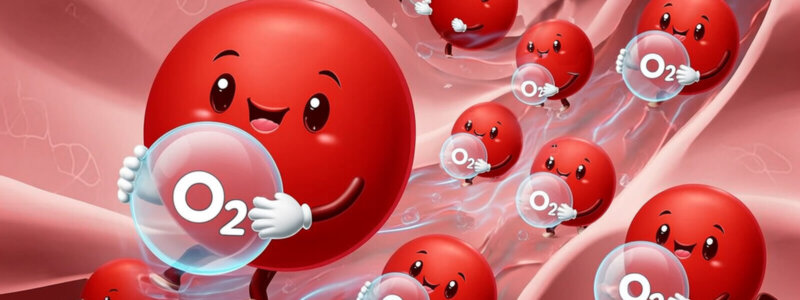
Of all the organs in the body, the human brain has the greatest need for oxygen. Oxygen and brain health are deeply connected. The brain makes up only about 2% of your body weight, yet at rest, it consumes roughly 20% of the oxygen you breathe.1 Every decision you make depends on oxygen arriving continuously and in sufficient quantity.
Here is what makes that dependency unusual: unlike muscle tissue, the brain stores virtually no oxygen as a reserve.2 It cannot buffer against interruption. When oxygen supply drops, brain function begins to fall off within minutes. In severe cases, damage can become irreversible within five to fifteen minutes of deprivation.<3 That level of sensitivity helps explain not only what happens during oxygen emergencies, but why maintaining healthy oxygen levels has measurable effects on how well the brain functions throughout the day.
Why the Brain Demands So Much Oxygen
The brain’s outsized oxygen appetite comes down to the energy demands of neurons. Nerve cells continuously fire electrical signals, and after each firing, they must recharge and prepare to fire again. That recharging process requires large amounts of adenosine triphosphate — ATP, the cell’s primary energy molecule. About 60% of all the oxygen the brain consumes goes toward generating ATP.4
Neuron mitochondria are the tiny structures inside each cell that convert oxygen into usable energy. They need a continuous supply of both oxygen and glucose to maintain the brain’s resting state. This steady supply also sustains the chemical signals that pass between cells and powers the countless other functions that keep the brain working.5
This need for adequate oxygen is especially pronounced early in life. In children up to about age four, the brain uses approximately half of the body’s total oxygen supply. This is a direct result of the enormous energy demands of early neural development.6
What Happens When Oxygen Falls Short
When the oxygen supply to the brain is interrupted or reduced — a condition known as hypoxia — the effects spread quickly and in a predictable sequence. ATP production drops almost immediately, which disrupts the delicate electrical balance that keeps brain cells functioning normally.7 Sodium begins to accumulate inside cells. Cells begin to swell. The disruption then triggers the release of excitatory neurotransmitters — most critically, a dangerous amount of glutamate.
Neurotransmitters are the chemical messengers that carry signals between nerve cells. Excitatory neurotransmitters are the kind that tell a receiving cell to fire and pass the signal along — they are what keep the brain active and responsive. Glutamate is the brain’s most common excitatory neurotransmitter that, under normal conditions, is essential for learning and memory. But when oxygen deprivation causes neurons to release excess glutamate, it becomes toxic. The resulting glutamate overload activates cellular receptors that then flood neurons with calcium. This sets off a chain reaction that generates free radicals — reactive molecules that damage cell membranes and, if the process continues for too long, kill nerve cells.8
Brain tissue is particularly vulnerable to this kind of damage because it has weaker antioxidant defenses than most other organs.9 That vulnerability helps explain why even brief oxygen loss can cause far more damage to the brain than to other organs.
The Glutamate-Oxygen Connection and Brain Health
One of the more interesting findings in brain oxygen research involves an enzyme called glutamate oxaloacetate transaminase — GOT — and how oxygen levels directly affect its behavior.
GOT is an enzyme — a protein that triggers or speeds up chemical reactions in the body. Most importantly for the brain, GOT can metabolize excess glutamate.
Research from Ohio State University found that when brain tissue hypoxia was corrected with supplemental oxygen, GOT levels increased significantly.10 GOT is capable of metabolizing excess glutamate in the brain that becomes toxic during oxygen deprivation. GOT does this by converting excess glutamate into intermediates that fuel the brain’s energy cycle rather than causing damage.11
In plain terms: when sufficient oxygen is present, the brain can activate a built-in mechanism that takes what would otherwise be a toxic accumulation and turns it into usable fuel for oxygen-stressed neurons. Researchers described this as a kind of “protective switch” — one that is switched on by the presence of oxygen and switched off in its absence.12
This finding helps explain, at a molecular level, why oxygen availability is so directly tied to how the brain copes under stress. It also explains why researchers continue to look at oxygen-sensitive pathways as a window into oxygen and brain health.

Oxygen, Aging, and Everyday Cognitive Function
The connection between oxygen and brain health extends well beyond medical emergencies. Research has found that lower blood oxygen saturation is associated with measurable declines in everyday cognitive function — including attention, memory, and the speed at which the brain processes information.13
Studies examining the brain during active cognitive work have found that tasks involving learning, problem-solving, and memory retrieval increase the brain’s oxygen demand in specific regions.14 The prefrontal cortex — the region involved in decision-making, planning, and attention — is among the areas most sensitive to fluctuations in oxygen availability. 15
As the brain ages, its relationship with oxygen becomes more complex. Research has found that older adults tend to have lower total cerebral blood flow and less grey matter volume. Yet their brains appear to extract more oxygen per unit of tissue than those of younger adults to maintain normal function.16 In other words, the aging brain has to do more with less. This helps explain why conditions that reduce available oxygen — poor circulation, reduced lung function, disrupted sleep — can have a more pronounced effect on cognitive sharpness in older adults.
A study published in 2025 found that patients with blood oxygen saturation below 95% scored significantly lower on a standardized cognitive assessment than those with normal saturation levels.17 The researchers noted that keeping an eye on oxygen levels may be an important part of monitoring cognitive health, especially in older people with heart or circulatory conditions.
What the Research Says About Oxygen and Brain Health
The picture that emerges from brain oxygen research is consistent: the brain’s capacity for clear thinking, memory, learning, and resilience is closely tied to a steady, adequate supply of oxygen. The evidence points to good oxygen levels as foundational to how the brain functions at every level — from the firing of individual neurons to the complex mental work that defines daily life.
Maintaining healthy oxygen levels remains one of the most direct ways to support long-term oxygen and brain health. Regular exercise supports lung capacity and circulation. Quality sleep, healthy breathing practices, and attention to the factors that affect how efficiently the body delivers and uses oxygen all play a role.
Also Consider
If you are looking for additional support for your body’s oxygen levels, OxygenSuperCharger™ is a bio-available liquid oxygen supplement that provides stabilized oxygen directly to the body. You can read more about the clinical research supporting ASO® technology on our Research and Studies page.
References
- Sokoloff L. “Regulation of Cerebral Metabolic Rate.” Basic Neurochemistry. NCBI Bookshelf. NIH. https://www.ncbi.nlm.nih.gov/books/NBK28194/
- StatPearls. “Hypoxic Brain Injury.” NCBI Bookshelf. 2023. NIH. https://www.ncbi.nlm.nih.gov/books/NBK537310/
- ScienceDirect. “Brain Oxygen Consumption.” ScienceDirect Topics. https://www.sciencedirect.com/topics/medicine-and-dentistry/brain-oxygen-consumption
- ScienceDirect. “Brain Oxygen Consumption.” ScienceDirect Topics. https://www.sciencedirect.com/topics/medicine-and-dentistry/brain-oxygen-consumption
- Watts ME, Pocock R, Claudianos C. “Brain Energy and Oxygen Metabolism: Emerging Role in Normal Function and Disease.” Front Mol Neurosci. 2018. PMC. https://pmc.ncbi.nlm.nih.gov/articles/PMC6023993/
- Kodali BS. “Cerebral Metabolism.” Anesthesiology Core Review. McGraw Hill Medical. https://accessanesthesiology.mhmedical.com/content.aspx?bookid=1750§ionid=117318875
- StatPearls. “Hypoxic Brain Injury.” NCBI Bookshelf. 2023. NIH. https://www.ncbi.nlm.nih.gov/books/NBK537310/
- Yin KJ, et al. “Mitochondria in Ischemic Stroke: New Insight and Implications.” Aging Dis. 2018. PMC. https://pmc.ncbi.nlm.nih.gov/articles/PMC6147588/
- Yilmaz G, Granger DN. “Inflammatory mechanisms in ischemic stroke: therapeutic approaches.” Lab Invest. 2010. PMC. https://pmc.ncbi.nlm.nih.gov/articles/PMC2780998/
- Rink C, et al. “Oxygen-Inducible Glutamate Oxaloacetate Transaminase as Protective Switch Transforming Neurotoxic Glutamate to Metabolic Fuel During Acute Ischemic Stroke.” Antioxid Redox Signal. 2011. PMC. https://pmc.ncbi.nlm.nih.gov/articles/PMC3078502/
- Khanna S, et al. “Inducible Glutamate Oxaloacetate Transaminase as a Therapeutic Target Against Ischemic Stroke.” Antioxid Redox Signal. 2015. PMC. https://pmc.ncbi.nlm.nih.gov/articles/PMC4281871/
- Rink C, et al. “Oxygen-Inducible Glutamate Oxaloacetate Transaminase as Protective Switch Transforming Neurotoxic Glutamate to Metabolic Fuel During Acute Ischemic Stroke.” Antioxid Redox Signal. 2011. PMC. https://pmc.ncbi.nlm.nih.gov/articles/PMC3078502/
- Shahin AA, et al. “The Association Between Oxygen Saturation Levels and Cognitive Decline in Patients with Cardiovascular Disorders.” Alzheimers Dement. 2025. PMC. https://pmc.ncbi.nlm.nih.gov/articles/PMC12726665/
- Bagyaraj M, et al. “From hypoxic pockets to daily routines: linking brain oxygenation and cognitive resilience.” Front Neurosci. 2025. PMC. https://pmc.ncbi.nlm.nih.gov/articles/PMC11814472/
- Bagyaraj M, et al. “From hypoxic pockets to daily routines: linking brain oxygenation and cognitive resilience.” Front Neurosci. 2025. PMC. https://pmc.ncbi.nlm.nih.gov/articles/PMC11814472/
- Satterthwaite TD, et al. “An investigation of cerebral oxygen utilization, blood flow, and cognition in healthy aging.” Front Aging Neurosci. 2018. PMC. https://www.ncbi.nlm.nih.gov/pmc/articles/PMC5963791/
- Shahin AA, et al. “The Association Between Oxygen Saturation Levels and Cognitive Decline in Patients with Cardiovascular Disorders.” Alzheimer’s Dement. 2025. PMC. https://pmc.ncbi.nlm.nih.gov/articles/PMC12726665/

-
Ultra Strength OxygenSuperCharger2, 25% Stronger, 16–Ounce Bottle
$119.97 Add to cart -
Ultra Strength OxygenSuperCharger2, 25% Stronger, 2–Ounce (Sample Size)
$35.97 Add to cart -
Original 35% Strength OxygenSuperCharger, 16–Ounce Bottle
$96.97 Add to cart -

Original 35% Strength OxygenSuperCharger, 2–Ounce (Sample Size)
$27.97 Add to cart -

MineralSuperCharger, Premium Multi-Mineral Supplement, 32-Ounce Quart
$98.97 Add to cart -

MineralSuperCharger, Premium Multi-Mineral Supplement, 8-Ounce (Sample Size)
$29.97 Add to cart -

Zinc – Plant-Sourced Mineral Concentrate, 16-ounce
$24.97 Add to cart -

O4 Nasal Spray with Zinc
$14.97 Add to cart