Oxygen and Sleep: What Happens When You Close Your Eyes

Most people think of sleep as a time when the body simply shuts down. In reality, sleep is one of the most active periods of your day. Your brain is consolidating memories, your cells are repairing themselves, your immune system is strengthening — and all of it depends on oxygen. The relationship between oxygen and sleep is more dynamic and more consequential than most people realize.
Understanding what happens to oxygen while you sleep — and what happens when that process is disrupted — offers a window into some of the most important factors affecting your health, your energy, and even the long-term health of your brain.

What Happens to Oxygen Levels During Normal Sleep
Oxygen levels in the blood naturally shift during sleep. For most healthy adults, blood oxygen saturation stays between 95% and 100% overnight — close to waking levels. But the body does not hold those levels perfectly flat throughout the night.1
As you cycle through different sleep stages, your breathing patterns change. During deep non-REM sleep, breathing slows and becomes regular, and oxygen saturation tends to stay stable. During REM sleep — the dreaming stage — breathing becomes more irregular, causing small, brief dips in oxygen saturation. In healthy people, these dips are normal and resolve on their own within seconds.2
A healthy sleeper might see oxygen saturation drop from 98% to 95% during REM. That is not a cause for concern. What matters clinically is sustained drops — particularly when oxygen falls below 90% repeatedly or for extended periods during the night.3
Several everyday factors influence how well the body maintains oxygen saturation during sleep:
- Sleep position: Sleeping on your back can allow soft tissue in the throat to partially block airflow, contributing to oxygen dips. Sleeping on your side tends to support more stable saturation through the night.4
- Alcohol: Research has found that drinking before bed significantly worsens nighttime oxygen levels. One study found that the rate of breathing disruptions nearly tripled after moderate alcohol consumption before sleep, and the time spent with low oxygen saturation increased more than four times compared to alcohol-free nights.5
- Altitude: Higher elevations mean less oxygen in each breath. Even healthy people can experience lower overnight oxygen saturation at altitude until their bodies adjust.6
- Age: Older adults tend to have more variable nighttime breathing patterns and are more susceptible to overnight oxygen fluctuations.7

The Brain’s Secret Work During Sleep: The Glymphatic System
One of the most significant discoveries in sleep science in recent years is the glymphatic system — the brain’s own waste-clearance network, which operates mainly during sleep.
The glymphatic system works by pushing cerebrospinal fluid through the spaces between brain cells, flushing out waste products that build up during waking hours. During deep sleep, brain cells shrink by as much as 60%, expanding the spaces between the cells and allowing fluid to flow more freely.8
The glymphatic system is an active process that requires energy — and oxygen — to function. Research has found that the glymphatic system clears toxic proteins — including amyloid-beta and tau, the proteins linked to Alzheimer’s disease — far more efficiently during sleep than during wakefulness. One landmark study published in Science found that glymphatic clearance during wakefulness was roughly 90% lower than during sleep.9
When sleep is disrupted, so is this clearance process. Studies in both animals and humans have found that poor sleep reduces the removal of amyloid-beta and tau from the brain — a finding that has drawn significant attention in research on long-term brain health.10
For oxygen and sleep, the connection is direct: when nighttime oxygen levels are compromised — due to disrupted breathing, poor sleep quality, or other factors — the efficiency of this overnight brain-cleaning process declines. Research in patients with sleep apnea has found significant impairment of glymphatic function tied directly to the oxygen drops that characterize the condition.11
How Poor Sleep Affects Daytime Oxygen Use
The effects of disrupted sleep on oxygen extend well beyond the night itself. Research has found that poor sleep has measurable effects on how efficiently the brain uses oxygen the next day.
Studies using brain imaging have found that key areas of the brain become significantly less active in sleep-deprived people, particularly in regions responsible for attention, information processing, and executive function. The brain relies on increased blood flow and oxygen delivery to power active regions. When sleep deprivation reduces that activity, the brain is simply not using oxygen as effectively as it should.12
One study found that after sleep deprivation, the prefrontal cortex — the area responsible for decision-making, planning, and sustained attention — showed signs of working harder to maintain normal performance. The sleep-deprived brain was consuming more oxygen to produce the same output it would normally generate with less effort after a good night’s rest.13
In plain terms, poor sleep doesn’t just make you tired. It makes your brain less efficient at using the oxygen it receives — and that shows up in focus, memory, reaction time, and the ability to handle complex tasks throughout the day.
Where Oxygen and Sleep Apnea Intersect
Sleep apnea is the most dramatic example of what happens when the oxygen-sleep relationship breaks down. Sleep apnea is characterized by repeated interruptions in breathing during sleep, each causing a drop in blood oxygen saturation. Clinically, these are called oxygen desaturation events — defined as a drop of 4% or more from baseline oxygen saturation.14
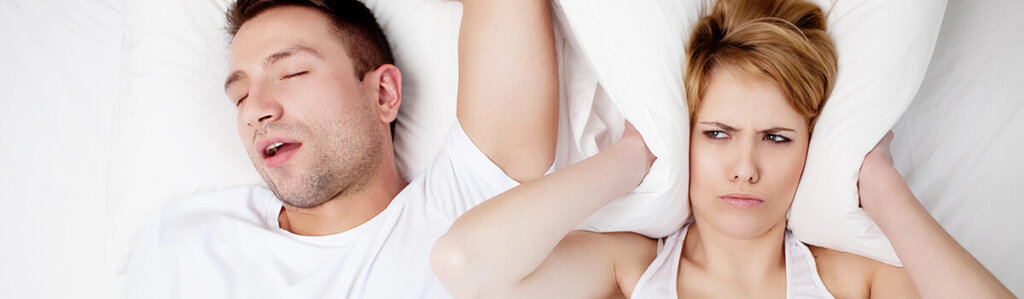
In the most common form, obstructive sleep apnea, soft tissue in the throat collapses during sleep, blocking the airway. The brain detects the falling oxygen level and briefly rouses the person enough to restore breathing — often without the person ever fully waking or becoming aware of it. This cycle can repeat dozens or even hundreds of times per night.
Research has found that the cumulative impact of these nightly oxygen drops — not just how often they occur, but how deep and how long they are — is the most important predictor of health consequences from sleep apnea. Studies have linked the severity of oxygen desaturation to structural brain changes, cognitive impairment in attention and executive function, and cardiovascular problems, including high blood pressure.15
Despite affecting a significant portion of the adult population, sleep apnea is widely underdiagnosed. Many people with the condition have no idea their breathing is being disrupted during the night.

Men, Women, and Sleep Oxygen: An Important Difference
Research has found meaningful differences between men and women in how sleep apnea presents — and those differences have real consequences for diagnosis.
Sleep apnea is diagnosed more often in men than in women. But the research suggests this reflects a difference in how the condition looks, not necessarily how common it is. Studies have found that in women with sleep apnea, individual breathing events are shorter and less severe, and apneas cluster during REM sleep rather than throughout the night.16
This different pattern means women’s symptoms often don’t match the classic picture — loud snoring, gasping, witnessed apneas (see below) — which was built largely from studies of men. Women with sleep apnea are more likely to report fatigue, morning headaches, insomnia, mood changes, and memory problems — symptoms that are easy to attribute to other causes and often delay diagnosis. 17
One large study comparing over 2,800 patients found that women with sleep apnea were on average older, had more associated health conditions, and were far less likely to have a bed partner report witnessing breathing stops during the night — where a partner observes the person stop breathing, sometimes for ten seconds or more, before they gasp or resume — one of the most common prompts for diagnosis in men.18
The takeaway is practical: women may be experiencing significant nighttime oxygen disruption without any of the classic warning signs. If persistent fatigue, morning headaches, or poor sleep quality are part of a pattern, it is worth discussing the oxygen-sleep connection with a doctor — regardless of whether snoring is present.
Supporting the Oxygen-Sleep Connection
The evidence consistently points in one direction: the quality of your sleep and your overnight oxygenation are deeply intertwined, and both shape how your body and brain function during waking hours.
Supporting healthy oxygen levels — through regular exercise, attention to sleep position and sleep habits, awareness of factors like alcohol that can worsen nighttime oxygen levels, and attention to symptoms that might point to disrupted breathing — are among the most direct ways to support better sleep and everything that depends on it.
Also Consider
If you are looking for additional support for your body’s oxygen levels, OxygenSuperCharger™ is a bio-available liquid oxygen supplement that provides stabilized oxygen directly to the body. You can read more about the clinical research supporting ASO® technology on our Research and Studies page.
References
- Superpower.com. “What Are Normal Oxygen Levels During Sleep?” 2026. https://superpower.com/guides/what-are-normal-oxygen-levels-during-sleep
- EasyRest. “What is a Normal Blood Oxygen Level During Sleep?” 2025. https://www.easyrest.com/what-is-a-normal-blood-oxygen-level-during-sleep/
- SleepApnea.org. “Does Your Blood Oxygen Level Drop During Sleep?” 2026. https://www.sleepapnea.org/sleep-health/does-oxygen-level-drop-when-you-sleep/
- SleepCareOnline. “Normal Blood Oxygen Level While Sleeping: Safe SpO₂ Range.” 2026. https://www.sleepcareonline.com/articles/what-is-a-normal-blood-oxygen-level-while-sleeping/
- Izumi I, et al. “Effect of moderate alcohol intake on nocturnal sleep respiratory parameters in healthy middle-aged men.” Sleep Breath. 2011. PubMed. https://pubmed.ncbi.nlm.nih.gov/21432159/
- Gonzalez-Garcia M, et al. “Altitude and Breathing during Sleep in Healthy Persons and Sleep Disordered Patients: A Systematic Review.” PMC. 2023. https://pmc.ncbi.nlm.nih.gov/articles/PMC10157825/
- Sleepiverse. “Normal Oxygen Levels During Sleep: What to Know.” 2026. https://sleepiverse.com/articles/what-are-normal-oxygen-levels-during-sleep/
- Rasmussen MK, et al. “The Sleeping Brain: Harnessing the Power of the Glymphatic System through Lifestyle Choices.” Front Aging Neurosci. 2020. PMC. https://pmc.ncbi.nlm.nih.gov/articles/PMC7698404/
- Xie L, et al. “Sleep Drives Metabolite Clearance from the Adult Brain.” Science. 2013. PMC. https://pmc.ncbi.nlm.nih.gov/articles/PMC3880190/
- Nedergaard M, et al. “Sleep-Dependent Clearance of Brain Metabolites via the Glymphatic System.” PMC. 2025. https://pmc.ncbi.nlm.nih.gov/articles/PMC13079953/
- Roy B, et al. “Impaired Glymphatic System Actions in Obstructive Sleep Apnea Adults.” Cited in: Honehealth.com. https://honehealth.com/edge/what-are-normal-oxygen-levels-during-sleep/
- Innes CRH, et al. “Sleep deprivation impairs cognitive performance, alters task-associated cerebral blood flow and decreases cortical neurovascular coupling-related hemodynamic responses.” Sci Rep. 2021. https://www.nature.com/articles/s41598-021-00188-8
- Wong ML, et al. “Chronotype predicts working memory-dependent regional cerebral oxygenation.” PMC. 2023. https://pmc.ncbi.nlm.nih.gov/articles/PMC10587096/
- Superpower.com. “What Are Normal Oxygen Levels During Sleep?” 2026. https://superpower.com/guides/what-are-normal-oxygen-levels-during-sleep
- Perger E, et al. “Relationships between brain tissue damage, oxygen desaturation, and disease severity in obstructive sleep apnea.” PMC. 2022. https://pmc.ncbi.nlm.nih.gov/articles/PMC9713923/
- Bonsignore MR, et al. “Gender Differences in the Context of Obstructive Sleep Apnea and Metabolic Diseases.” Front Physiol. 2021. PMC. https://pmc.ncbi.nlm.nih.gov/articles/PMC8712658/
- Valipour A, et al. “Gender-specific differences in OSA.” Sleep Breath. 2017. https://link.springer.com/doi/10.1007/s11325-017-1482-9
- Valipour A, et al. “Gender-specific differences in OSA.” Sleep Breath. 2017. https://link.springer.com/doi/10.1007/s11325-017-1482-9

-
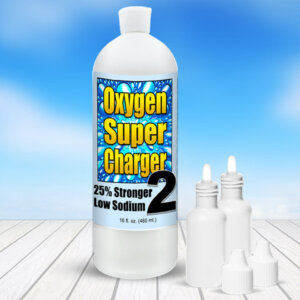
Ultra Strength OxygenSuperCharger2, 25% Stronger, 16–Ounce Bottle
$119.97 Add to cart -

Ultra Strength OxygenSuperCharger2, 25% Stronger, 2–Ounce (Sample Size)
$35.97 Add to cart -

Original 35% Strength OxygenSuperCharger, 16–Ounce Bottle
$96.97 Add to cart -

Original 35% Strength OxygenSuperCharger, 2–Ounce (Sample Size)
$27.97 Add to cart -

MineralSuperCharger, Premium Multi-Mineral Supplement, 32-Ounce Quart
$98.97 Add to cart -

MineralSuperCharger, Premium Multi-Mineral Supplement, 8-Ounce (Sample Size)
$29.97 Add to cart -

Zinc – Plant-Sourced Mineral Concentrate, 16-ounce
$24.97 Add to cart -

O4 Nasal Spray with Zinc
$14.97 Add to cart