Water For The Soul: The Science Behind Our Oldest Obsession

Water has captivated human beings for as long as we have been capable of wonder. Not just because we need it to survive — though we do — but because something deeper seems to stir when we stand at the edge of the ocean, or watch rain fall, or simply hold a glass of cool water on a hot day. Philosophers, poets, and scientists have all come back to the same question: what is it about water?
The answer has as much to do with biology as it does with poetry.

Water and the Human Mind — A Long Conversation
Long before modern science, thinkers were trying to understand water’s place in the world. Thales of Miletus, one of the earliest Greek philosophers, proposed around 600 BCE that water was the fundamental substance of all things — the single element from which everything else arose. He was working from observation alone, and he was onto something: water is not simply one ingredient among many. Indeed, it is something foundational.
Centuries later, Lao Tzu wrote in the Tao Te Ching that water is the softest substance in the world — and yet, given enough time, it wears away even the hardest rock. He held water up as a model for living: patient, persistent, powerful, not through force but through constancy. Nothing in the world yields like water, he wrote, and yet nothing is better at wearing down what is hard and fixed.
What makes these observations worth noting is not just their elegance. It is that two thinkers, separated by centuries and continents, were pointing at the same truth. Water does not merely support life. In some way that is hard to put into words, it seems to embody the qualities we most associate with life itself.

The Science of Oxygen and Hydration
Modern science has put numbers to what ancient thinkers understood by feel. The human body is roughly 60% water by weight. The brain is approximately 75% water.1 The blood that carries oxygen to every cell is more than 90% water.
We are, in a very literal sense, mostly water.
What happens when that water runs low is striking. Research has found that a drop in hydration of just 1–2% of body weight — an amount most people would not notice — is enough to affect mood, alertness, and decision-making.2 Even mild dehydration increases fatigue, confusion, and mental sluggishness.3 The brain begins to signal distress long before thirst kicks in.
So the connection between water and how we feel — our energy, our clarity, our sense of being well — is not a metaphor. It’s biology. When we are well hydrated, our cells do their work. When we are not, something dims.
Water and Oxygen: The Inseparable Pair
This is where the story gets interesting. Water and oxygen are not simply two things the body needs. In fact, they are bound together — chemically, biologically, and in the way the body uses them.
Water is H2O: two hydrogen atoms bonded to one oxygen atom. Oxygen is already inside every molecule of water we drink. The circulatory system that carries oxygen to the body’s tissues is made almost entirely of water. The cellular processes that produce energy from oxygen take place in a fluid environment. Without enough water, oxygen cannot move through the body efficiently. Without enough oxygen, water alone cannot sustain the aerobic processes cells depend on.4
They work as a system. Oxygen and hydration are not two separate concerns — they are two sides of the same need.

Why We Sense Something More
Given all of this, it is not hard to understand why humans have always placed water at the center of their thinking about life. The ancient Egyptians saw it as the source from which all creation emerged. The Greeks counted it among the four elements that made up the world. Lao Tzu held it up as a model for wisdom itself.
None of these traditions had access to modern biochemistry. Yet all of them sensed, through observation and thought, that water was not just a substance — it was in some way the condition for everything else.
Science has not diminished that intuition. If anything, it has made it larger. When we learn that the brain is three-quarters water, that our mood is sensitive to hydration, that oxygen and water are bonded at the molecular level — the ancient sense that water is something foundational starts to look less like poetry and more like accurate perception, arrived at early.
The Quality of What We Drink
There is one more thing worth considering. Not all water is the same.
Most people accept that food varies in quality — a fresh vegetable is different from a processed one. Water is no different. In fact, the relationship between oxygen and hydration starts with the water itself. Tap and bottled water vary in mineral content, dissolved oxygen, and overall quality. The average glass of water contains less than ten parts per million of dissolved bio-available oxygen.5
The body uses dissolved oxygen in water differently from the oxygen it breathes. When oxygen is stabilized in water in a bio-available form, it is available directly to the bloodstream and cells — supporting the same aerobic processes that keep them running, through a different route.
OxygenSuperCharger™ is a bio-available liquid oxygen supplement that provides stabilized oxygen in water at concentrations far above what ordinary water contains. If the connection between oxygen and hydration is as fundamental as science suggests, then adding bio-available oxygen to the water you already drink is a simple way to support both at once. You can read more about the clinical research behind ASO® technology on our Research and Studies page.
A Final Thought
Thales was onto something when he made water the center of his philosophy. So was Lao Tzu when he held it up as a model for how to move through the world. And so are the people who instinctively reach for a glass of water when they feel tired, foggy, or off — even before they can explain why.
The science of oxygen and hydration is giving us a clearer picture of something people have always sensed: that water is not background. It is not just support for the things that matter. In a very real sense, it is the medium through which everything else becomes possible.
Water really is good for the soul.
References
- Riebl SK, Davy BM. “The Hydration Equation: Update on Water Balance and Cognitive Performance.” ACSM’s Health & Fitness Journal. 2013. PMC. https://www.ncbi.nlm.nih.gov/pmc/articles/PMC4207053/
- Mündel T, Hill S, Legg S. “Hypohydration per se affects mood states and executive cognitive processing.” Extreme Physiology & Medicine. 2015. PMC. https://www.ncbi.nlm.nih.gov/pmc/articles/PMC4580852/
- Pross N, et al. “Influence of progressive fluid deprivation on mood and physiological markers of dehydration in women.” British Journal of Nutrition. 2013. PMC. https://www.ncbi.nlm.nih.gov/pmc/articles/PMC3553795/
- Bhave G, Bhave M. “Water and oxygen: the inseparable pair in cellular metabolism.” Biochemistry Education. Referenced in: Verkman AS. “Water channels in cell membranes.” Annual Review of Physiology. 1992. PMC context: https://www.ncbi.nlm.nih.gov/pmc/articles/PMC1307592/
- OxygenSuperCharger FAQs. https://oxygensupercharger.com/faqs/

-
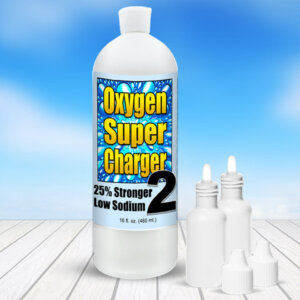
Ultra Strength OxygenSuperCharger2, 25% Stronger, 16–Ounce Bottle
$119.97 Add to cart -
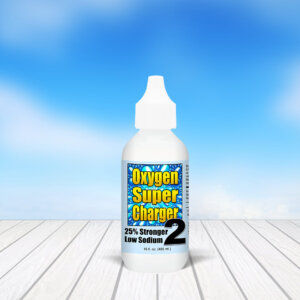
Ultra Strength OxygenSuperCharger2, 25% Stronger, 2–Ounce (Sample Size)
$35.97 Add to cart -
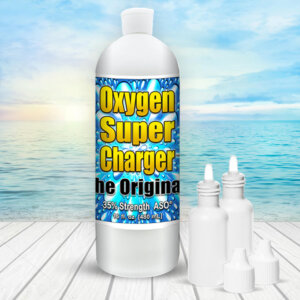
Original 35% Strength OxygenSuperCharger, 16–Ounce Bottle
$96.97 Add to cart -
Original 35% Strength OxygenSuperCharger, 2–Ounce (Sample Size)
$27.97 Add to cart -

MineralSuperCharger, Premium Multi-Mineral Supplement, 32-Ounce Quart
$98.97 Add to cart -
MineralSuperCharger, Premium Multi-Mineral Supplement, 8-Ounce (Sample Size)
$29.97 Add to cart -
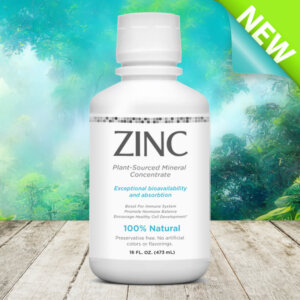
Zinc – Plant-Sourced Mineral Concentrate, 16-ounce
$24.97 Add to cart -

O4 Nasal Spray with Zinc
$14.97 Add to cart