Oxygen and Fibromyalgia: What the Research Shows

Fibromyalgia syndrome (FMS) is one of the most common and least understood chronic pain conditions. It affects an estimated 2–4% of the population and occurs approximately nine times more frequently in women than in men. Its hallmark symptoms — widespread muscle pain, persistent fatigue, disrupted sleep, and difficulty thinking clearly — are not yet fully understood. In recent years, a growing body of research has looked at the relationship between oxygen and fibromyalgia. Specifically, researchers have been examining how oxygen is delivered to and used by muscle tissue in people with the condition. The findings are consistent and significant. This article summarizes what the research currently shows, and is careful to distinguish between what is well established and what is still being studied.
What Fibromyalgia Is — and What It Isn’t
Fibromyalgia is not a disease of inflammation or tissue damage in the way that arthritis is. There are no structural abnormalities that show up on standard imaging. This has historically made it difficult to study and easy to dismiss. However, research over the past two decades has identified several measurable physical differences in people with fibromyalgia. These differences show up particularly in the tiny blood vessels that supply muscles, in how muscles use oxygen, and in the energy-producing structures inside cells.
The current scientific view is that fibromyalgia involves a disruption in how the brain and nervous system process pain signals. But research increasingly suggests that what is happening in the muscles themselves — especially around oxygen delivery and energy production — also plays a meaningful role.
How Blood Reaches the Muscles — and Why It Matters
One of the most consistently documented findings in fibromyalgia research is a problem with microcirculation. This is the network of tiny blood vessels — arterioles, capillaries, and venules — that carry oxygen and nutrients directly to muscle tissue.
A 2004 study published in Arthritis Research & Therapy used specialized microscopy and laser measurement tools to directly examine these tiny blood vessels in fibromyalgia patients. The researchers found measurable structural and functional abnormalities compared to a control group — people of similar age and background who do not have fibromyalgia.1
A 2025 review published in Medical Gas Research explained the likely mechanism. In fibromyalgia, the small blood vessels appear to constrict (narrow) more than they should, reducing the flow of oxygen-rich blood to muscle tissue. This appears to be connected to dysregulation of the autonomic nervous system — the part that controls involuntary functions like heart rate and blood vessel diameter.2 The result is a gap between how much oxygen the muscles need and how much they actually receive.
This matters because when muscles are starved of oxygen, they produce pain signals and fatigue more quickly. Earlier researchers Lund and Bengtsson were among the first to measure low tissue oxygen levels in the muscles of fibromyalgia patients. Later, Henriksson identified two likely contributors to the characteristic pain of the condition: chronically tight muscles, which compress the blood vessels running through them, and insufficient oxygen supply to those muscles.
When Muscles Can’t Use the Oxygen They Receive
Beyond the delivery problem, research has also found that fibromyalgia affects how well muscles extract and use oxygen once it arrives.
A study published in Arthritis Research & Therapy by Shang et al. used near-infrared light technology to measure muscle blood flow, oxygen levels, and energy use in women with fibromyalgia and a control group during exercise.3 The findings were striking. The muscles of fibromyalgia patients used significantly less oxygen during exercise than those of the control group. After tiring exercise, it took fibromyalgia patients 50% longer for their muscle oxygen levels to recover.
A 2025 review in PubMed Central (PMC) confirmed that fibromyalgia patients show muscle oxygen saturation levels up to 20% below what is considered normal.2 That deficit in oxygen use directly limits the muscles’ ability to produce ATP (adenosine triphosphate) — the fuel that powers all physical activity.
This helps explain the persistent fatigue and low exercise tolerance that fibromyalgia patients consistently describe. When muscles cannot use oxygen efficiently, they simply cannot generate enough energy to sustain normal activity.
The Energy Factories Inside Cells
A growing area of research focuses on the mitochondria — the tiny structures inside cells that convert oxygen into usable energy. Think of them as the power plants of the cell. Multiple studies have now found evidence that these power plants are not functioning properly in fibromyalgia patients.
A 2024 study published in Clinical and Experimental Rheumatology used electron microscopy to look directly at mitochondrial structure in fibromyalgia patients and a control group.4 The researchers found visible structural damage in the mitochondria of fibromyalgia patients — including the loss of internal membranes that are essential to energy production. These structural changes were more severe in patients with worse symptoms. They were also associated with reduced energy output, increased stress on the cells, and the buildup of harmful waste products called reactive oxygen species. Reactive oxygen species are unstable molecules that can damage cells when they accumulate in large amounts.
A separate 2020 study used direct muscle measurement techniques to examine energy metabolism in patients with fibromyalgia and a control group.5 It found significantly lower levels of key forms of stored cellular energy. Namely, ATP and phosphocreatine (a molecule muscles use as a rapid energy reserve) were both significantly lower in the muscles of fibromyalgia patients compared to the control group. Muscle blood flow was also significantly lower. The severity of these energy deficits correlated directly with both pain intensity and how sensitive the muscles were to pressure.
A further 2024 study of 50 fibromyalgia patients found a significantly lower bioenergetic health index compared to the control group.6 This index is essentially a score of how well the mitochondria are functioning. When mitochondria malfunction, the downstream effects include reduced energy production, increased cellular stress, and disrupted regulation of other cellular processes.
It is worth noting that research has not yet established whether mitochondrial dysfunction in fibromyalgia is a cause, a consequence of chronic pain and reduced activity, or both. What the studies consistently show is that it is present and that it tracks with how severe the symptoms are.

Drops in Oxygen During Sleep
A further connection between oxygen and fibromyalgia involves what happens at night. A study published in PubMed found that fibromyalgia patients experience measurable drops in blood oxygen levels during sleep.7 This may help explain the unrefreshing sleep and pronounced morning fatigue that many fibromyalgia patients describe as among their most debilitating symptoms.
Taken together with the daytime findings, the pattern is consistent. People with fibromyalgia appear to have difficulty maintaining adequate oxygen levels in muscle tissue across both waking and sleeping hours.

What Hyperbaric Oxygen and Fibromyalgia Research Shows
The most direct clinical evidence for the link between oxygen and fibromyalgia comes from research on hyperbaric oxygen therapy (HBOT). In HBOT, patients breathe pure oxygen inside a pressurized chamber. This dramatically increases the amount of oxygen dissolved in the blood and delivered to tissues throughout the body.
A 2023 analysis of four randomized controlled trials published in PMC found that HBOT produced significant improvements in fibromyalgia impact scores compared with control conditions.8 Tender point counts — a measure of how many specific pressure-sensitive spots on the body are painful — also improved significantly. A separate prospective clinical trial by Efrati et al. was published in PLOS ONE, a peer-reviewed open-access scientific journal. It found that HBOT produced measurable changes in brain activity in pain-related areas of fibromyalgia patients.9 These changes were consistent with reduced pain processing.
It is important to be clear: HBOT is a supervised medical treatment. These studies are included here because they provide direct evidence that increasing oxygen availability in the body produces measurable changes in fibromyalgia. That supports the broader research picture of oxygen’s role in the condition. They do not imply that a dietary supplement produces the same effects.
What the Research Shows — and What It Doesn’t
The research on oxygen and fibromyalgia consistently points to meaningful connections. These include reduced oxygen delivery to muscles and an impaired ability to use the oxygen they receive. They also include damage to the energy-producing structures inside cells and drops in blood oxygen during sleep. These findings come from direct measurement studies—not theory—using techniques such as near-infrared spectroscopy, electron microscopy, magnetic resonance spectroscopy, and randomized controlled trials.
What the research has not yet established is whether oxygen deficiency is a root cause of fibromyalgia or a major contributing factor. It may also be a measurable side effect of other underlying processes. These are open questions that ongoing research continues to explore.
For anyone living with fibromyalgia, working with a qualified medical professional remains the appropriate course of action. The research discussed here is presented for educational purposes only.
NOTE: Information on this website is provided for educational purposes only and is not intended to prescribe treatment of any medical condition. Statements made on this website have not been evaluated by the FDA. These products are not intended to treat, diagnose, cure, or prevent any disease or medical condition, and are sold as dietary supplements only. Consult with a qualified medical professional before taking any dietary supplement.
References
- Morf S, et al. “Microcirculation abnormalities in patients with fibromyalgia — measured by capillary microscopy and laser fluxmetry.” Arthritis Research & Therapy. 2004. PMC. https://pmc.ncbi.nlm.nih.gov/articles/PMC1065312/
- Rubio-Zarapuz A, et al. “Unveiling the link: exploring muscle oxygen saturation in fibromyalgia and its implications for symptomatology and therapeutic strategies.” Medical Gas Research. 2025. PMC. https://pmc.ncbi.nlm.nih.gov/articles/PMC11515064/
- Shang Y, et al. “Noninvasive optical characterization of muscle blood flow, oxygenation, and metabolism in women with fibromyalgia.” Arthritis Research & Therapy. 2012. https://arthritis-research.biomedcentral.com/articles/10.1186/ar4079
- Comert M, et al. “Mitochondrial structural alterations in fibromyalgia: a pilot electron microscopy study.” Clinical and Experimental Rheumatology. 2024. PubMed. https://pubmed.ncbi.nlm.nih.gov/38966946/
- Gerdle B, et al. “Evidence of mitochondrial dysfunction in fibromyalgia: deviating muscle energy metabolism detected using microdialysis and magnetic resonance.” Pain. 2020. PubMed. https://pubmed.ncbi.nlm.nih.gov/33142767/
- Montoro-García S, et al. “Mitochondrial function in patients affected with fibromyalgia syndrome is impaired and correlates with disease severity.” PMC. 2024. https://pmc.ncbi.nlm.nih.gov/articles/PMC11618515/
- Sergi M, et al. “Fibromyalgia syndrome: overnight falls in arterial oxygen saturation.” PubMed. 1999. https://pubmed.ncbi.nlm.nih.gov/8686716/
- Cao C, et al. “Effectiveness of hyperbaric oxygen for fibromyalgia: a meta-analysis of randomized controlled trials.” Clinical Practice. 2023. PMC. https://pmc.ncbi.nlm.nih.gov/articles/PMC10204569/
- Efrati S, et al. “Hyperbaric oxygen therapy can diminish fibromyalgia syndrome — prospective clinical trial.” PLOS ONE. 2015. PMC. https://pmc.ncbi.nlm.nih.gov/articles/PMC4444341/

-
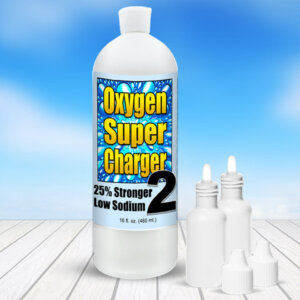
Ultra Strength OxygenSuperCharger2, 25% Stronger, 16–Ounce Bottle
$119.97 Add to cart -

Ultra Strength OxygenSuperCharger2, 25% Stronger, 2–Ounce (Sample Size)
$35.97 Add to cart -

Original 35% Strength OxygenSuperCharger, 16–Ounce Bottle
$96.97 Add to cart -

Original 35% Strength OxygenSuperCharger, 2–Ounce (Sample Size)
$27.97 Add to cart -

MineralSuperCharger, Premium Multi-Mineral Supplement, 32-Ounce Quart
$98.97 Add to cart -

MineralSuperCharger, Premium Multi-Mineral Supplement, 8-Ounce (Sample Size)
$29.97 Add to cart -

Zinc – Plant-Sourced Mineral Concentrate, 16-ounce
$24.97 Add to cart -

O4 Nasal Spray with Zinc
$14.97 Add to cart