Flood Your Body with Oxygen: The Myths, Debunked

You have probably seen the phrase before. “Flood your body with oxygen” shows up in health books, on supplement labels, and across wellness blogs. It usually comes with a bold promise: do this one thing, and disease will not be able to touch you. It is a powerful idea, and parts of it are true. Oxygen really is essential to every cell you have. But the slogan also carries a lot of baggage. There are old claims that do not hold up. And there are a few that get repeated so often they sound like facts when they’re actually myths. This article sorts the two apart, so you will know what it can — and can’t — do when you flood your body with oxygen.
Where the Phrase Comes From
The expression goes back to the alternative-health movement of the late 1980s and 1990s. Around then, a wave of writers and lecturers began promoting what they called “oxygen therapies.” The best-known of them built a whole philosophy around one idea: modern life had starved our bodies of oxygen, and putting it back could fix almost anything. One popular book of that era even used the phrase as its title.
The appeal is easy to understand. The pollution, processed food, and worn-out soils of modern life are real concerns. And oxygen genuinely is central to health. The trouble was the leap that followed — from “oxygen matters” to “a lack of oxygen causes nearly all diseases, and adding more oxygen cures them all.” That is where the science falls apart. The movement took a real insight and stretched it into claims it could not back up. Those same claims are still circulating today, and we will get to each of them. But first, it is worth grounding ourselves in what oxygen genuinely does for the body — which is remarkable enough on its own, without overstating a thing.

What Oxygen Actually Does in the Body
Every cell in your body runs on oxygen. You breathe it in, it passes from your lungs into your blood, and a protein called hemoglobin carries it to your tissues.1 Inside your cells, oxygen powers the process that turns food into usable energy. When oxygen can’t reach the cells, their energy supply nearly stops within minutes.
Oxygen is not optional. It powers nearly everything your body does — and how well your body delivers and uses it is what really matters. For a full walk-through, see our companion article on how oxygen works in the body.
Nothing you just read is in dispute. But the claims below go further than the science supports.
Myths About Flooding Your Body with Oxygen

Myth 1: “Disease Can’t Live in Oxygen”
“Disease can’t live in oxygen” is the movement’s headline claim, and it is simply wrong. The argument runs like this: the bacteria, viruses, and fungi that cause illness all hate oxygen and cannot survive in its presence. So flooding the body with oxygen wipes them out.
Fact: There is a grain of truth behind this myth. A handful of dangerous bacteria are strict anaerobes — they can only live where oxygen is absent, and it harms or kills them. Among them are the bacteria that cause tetanus, botulism, and gas gangrene, along with a few parasites, such as those that cause giardiasis and amebic dysentery.2,3 But those are the exceptions, not the rule. Many of the organisms that cause serious disease need oxygen and thrive on it. Take tuberculosis: the bacterium behind it grows best in the oxygen-rich upper part of the lungs, and it actually depends on oxygen to multiply.4 Most disease-causing fungi need oxygen too. And even the strict anaerobes mostly take hold in low-oxygen pockets of the body — deep wounds, abscesses, the gut.2. In fact, those are places you cannot reach by breathing harder or taking a supplement. So the tidy claim that “disease can’t live in oxygen” turns out to be a partial truth stretched to cover everything.

Myth 2: “Oxygen Deficiency Is the Single Cause of All Disease”
The second claim is that almost every illness comes down to one root problem: too little oxygen. It’s a simple, satisfying explanation.
Fact: That simplicity is exactly the problem. Disease does not have a single cause. Genes, infection, injury, nutrition, age, environment, and plain bad luck all play a part, and they interact in ways no single thing can explain on its own.
Any time a health claim says that one hidden deficiency is behind all disease, treat it as a warning sign, not a breakthrough. Oxygen is one important factor among many. It is not the master switch for every condition. Genuine low oxygen in the body is a real, specific issue — we cover it in our oxygen deficiency article. But that is very different from claiming it explains everything.

Myth 3: “Flooding the Body with Oxygen Flushes Out Toxins and Microbes”
Here the idea rests on what the movement calls “active” oxygen — reactive forms far more aggressive than the ordinary oxygen you breathe, most often ozone and hydrogen peroxide. The claim is that this active oxygen oxidizes toxins, germs, and damaged cells — chemically burning them up. Then it sweeps them out of the body like a cleaning crew.
Fact: The chemistry is messier than that. Highly reactive oxygen does not politely target only the bad stuff. It damages your healthy cells too, attacking your DNA, your proteins, and the fats in your cell membranes.5 Your body keeps a whole defense system of antioxidants on hand to hold these reactions in check. Additionally, it is also why this kind of damage, which scientists call oxidative stress, contributes to aging and many diseases over time rather than curing them.6 In short, “oxidize everything” is not a harmless detox. It is the very process the body works hard to control. Our article on free radicals and aging digs into this further.
One more point worth making: ozone and hydrogen peroxide are very different from a gentle, stabilized oxygen supplement. Lumping the two together is a mistake. We cover those differences in our comparison of stabilized activated oxygen versus ozone and in is stabilized oxygen safe?.

Myth 4: “Breathing Harder Will Flood Your Body with Oxygen”
You’ll find a softer version of this myth popping up in daily life. It is the belief that big, forceful breaths flood your system with oxygen and give you a lift. This idea sounds reasonable, but it runs counter to how breathing actually works.
Fact: Carbon dioxide, not oxygen, mainly drives your urge to breathe. Sensors in your brainstem track rising carbon dioxide and adjust your breathing to keep it within a narrow range.7 When you over-breathe on purpose, you exhale too much carbon dioxide. Carbon dioxide normally helps keep your blood vessels open, so losing too much of it makes them narrow — especially in the brain. At the same time, through something called the Bohr effect, the low carbon dioxide makes hemoglobin cling to oxygen instead of handing it off to your tissues.1 It is why hyperventilating leaves you lightheaded rather than energized. For a healthy person, the real challenge is rarely getting oxygen in — it is delivering and using that oxygen well once it is there. Someone with weakened lungs faces a different situation. With COPD or other lung disease, getting enough of it in can be the real problem. That calls for a doctor’s care.
None of this makes breathing exercises pointless — far from it. Slow, full belly breathing calms the nervous system and counteracts the shallow chest breathing that creeps in when you sit all day. The difference is pace: gentle, controlled breathing genuinely helps, while fast, forceful over-breathing does not. The goal isn’t to cram in more air. It’s to breathe well.

Myth 5: “100% Blood Oxygen Saturation Is the Goal”
Pulse oximeters have turned oxygen saturation into a number people chase, on the assumption that higher is always better and 100% is the target.
Fact: In a healthy person at normal elevation, the blood leaving the lungs is already about 95 to 100% saturated.1 That means the hemoglobin is nearly full.
There is a reason you cannot push that number much higher just by taking in more oxygen. Once hemoglobin is nearly loaded, it has almost no room left to take on more.1 Your blood simply cannot carry much beyond what it already does. So a reading in the high 90s is exactly what you want to see, and there’s nothing to gain by chasing the last point or two up to 100%. Once your blood is in that healthy range, pushing the number higher isn’t the point. What matters, then, is how well that oxygen is released and used where your body needs it.

So Can You Actually “Flood Your Body with Oxygen”?
Here’s the honest answer… You cannot force-flood a healthy body with extra oxygen the way the old myth suggests, and you don’t want to. But you can support healthy oxygen levels and help your body deliver and use oxygen well. That is the version of “flood your body with oxygen” worth taking seriously.
The basics do most of the work. Regular movement improves how well your body carries and uses oxygen. Time in fresh, clean air helps. So does giving your blood the raw material it needs to carry oxygen in the first place. Iron matters most here, since it sits at the heart of every hemoglobin molecule — we cover that link in our article on iron, anemia, and oxygen—good sleep, steady hydration, and not smoking round out the list.
If you want to add a daily layer of support on top of the basics, a bio-available liquid oxygen supplement is a gentle, stabilized option. It is a very different thing from the harsh oxygen therapies of decades past. Think of it as support for healthy oxygen levels, not a cure-all.
The Bottom Line
“Flood your body with oxygen” was a catchy slogan wrapped around a kernel of truth and came with a lot of baggage. Oxygen is genuinely vital, and supporting your oxygen levels is sensible. But disease can live in oxygen. No single deficiency explains all illness. “Active oxygen” is not a magic cleaner. Breathing harder will not supercharge you. And a healthy person’s blood is already nearly full. Strip away the myths, and what remains is both simpler and more useful. Take care of the basics, and let oxygen do the remarkable job it already does.
Also Consider
If you are looking for additional support for your body’s oxygen levels, OxygenSuperCharger™ is a bio-available liquid oxygen supplement that provides stabilized oxygen directly to the body. You can read more about the clinical research supporting ASO® technology on our Research and Studies page.
References
- Patel S, Jose A, Mohiuddin SS. Physiology, Oxygen Transport and Carbon Dioxide Dissociation Curve. StatPearls. NCBI Bookshelf. https://www.ncbi.nlm.nih.gov/books/NBK539815/
- Anaerobic Infections. StatPearls. NCBI Bookshelf. https://www.ncbi.nlm.nih.gov/books/NBK482349/
- Drug Susceptibility Testing of Anaerobic Protozoa. PMC, National Library of Medicine. https://pmc.ncbi.nlm.nih.gov/articles/PMC90550/
- Cook GM, et al. Mycobacterium tuberculosis Metabolism. Microbiology Spectrum. American Society for Microbiology. https://journals.asm.org/doi/10.1128/microbiolspec.gpp3-0067-2019
- Juan CA, Pérez de la Lastra JM, Plou FJ, Pérez-Lebeña E, et al. Free radicals and their impact on health and antioxidant defenses: a review. Cell Death Discovery. 2025. https://www.nature.com/articles/s41420-024-02278-8
- Reactive oxygen species, toxicity, oxidative stress, and antioxidants: chronic diseases and aging. PubMed. https://pubmed.ncbi.nlm.nih.gov/37597078/
- Brinkman JE, Toro F, Sharma S. Physiology, Respiratory Drive. StatPearls. NCBI Bookshelf. https://www.ncbi.nlm.nih.gov/books/NBK482414/

-
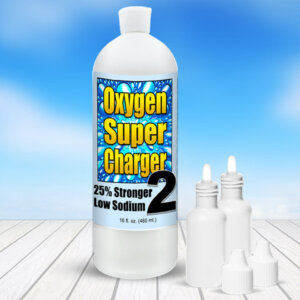
Ultra Strength OxygenSuperCharger2, 25% Stronger, 16–Ounce Bottle
$119.97 Add to cart -
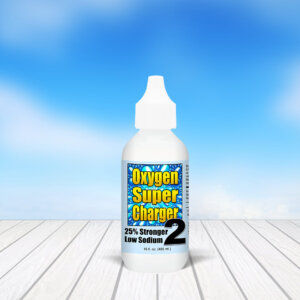
Ultra Strength OxygenSuperCharger2, 25% Stronger, 2–Ounce (Sample Size)
$35.97 Add to cart -

Original 35% Strength OxygenSuperCharger, 16–Ounce Bottle
$96.97 Add to cart -

Original 35% Strength OxygenSuperCharger, 2–Ounce (Sample Size)
$27.97 Add to cart -

MineralSuperCharger, Premium Multi-Mineral Supplement, 32-Ounce Quart
$98.97 Add to cart -

MineralSuperCharger, Premium Multi-Mineral Supplement, 8-Ounce (Sample Size)
$29.97 Add to cart -

Zinc – Plant-Sourced Mineral Concentrate, 16-ounce
$24.97 Add to cart -

O4 Nasal Spray with Zinc
$14.97 Add to cart