Oxygen and Detoxification: What You Need to Know

The word “detox” gets used loosely — green juices, cleanses, weekend fasts. But your body runs a detoxification system around the clock, and oxygen is one of its most essential elements. From the liver to the lymphatic system to the individual cell, oxygen plays a documented role in helping the body process and remove waste. Here is what the science shows.
What Detoxification Actually Means
Detoxification is not a single process. It is a collection of ongoing biological functions designed to identify, neutralize, and remove substances that do not belong in the body. These include waste products your cells generate naturally, as well as foreign substances like environmental pollutants and chemicals that enter the body from outside.1 Understanding the relationship between oxygen and detoxification starts with understanding how these systems work. The body’s primary detoxification organs are the liver, kidneys, lungs, skin, and lymphatic system. Each plays a different role, but all depend on energy — and energy, at the cellular level, depends on oxygen.
The Liver and the Oxygen Connection
The liver is the body’s main detoxification hub, and oxygen plays a direct role in its function. Research has shown that oxygen availability directly affects how well liver cells function overall, including their ability to carry out detoxification reactions.4
When the liver processes foreign substances — drugs, environmental chemicals, metabolic waste — it does so through a series of chemical reactions. The first stage, called Phase I detoxification, is handled mainly by a family of enzymes called cytochrome P450 (CYP) enzymes.2 What makes these enzymes remarkable is how they use oxygen. They attach an oxygen atom to the toxic substance, turning it into a water-soluble compound that the body can then process further and excrete.3
Without oxygen, these enzymes cannot do their job. This is not a metaphor — it is a straightforward biochemical fact. Oxygen is a required ingredient in the chemical reaction that makes harmful substances safe enough for the body to eliminate.

Metabolic Waste, Oxygen, and Detoxification
The link between oxygen and detoxification also shows up in how the body handles metabolic waste. Every cell in the body produces waste as a natural byproduct of making energy. Two of the most common forms are carbon dioxide and lactic acid.
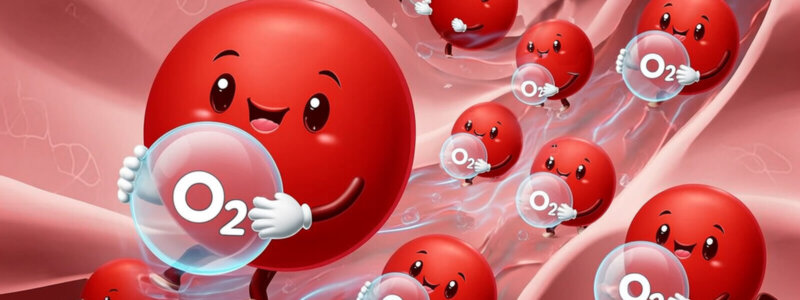
Carbon dioxide is produced when cells burn fuel through aerobic respiration — the oxygen-powered process that runs most of the body’s activity. The same circulatory system that brings oxygen to your tissues also picks up carbon dioxide and carries it back to the lungs to be exhaled.5 Oxygen delivery and carbon dioxide removal are two sides of the same process.
Lactic acid builds up when cells have to make energy without enough oxygen — a process called anaerobic metabolism. When oxygen is plentiful, cells use the more efficient aerobic pathway and lactic acid does not accumulate.6 When oxygen runs low, lactic acid builds up in the tissues, causing the muscle fatigue and soreness familiar to anyone who has pushed hard in a workout.
Keeping cellular oxygen levels up supports the body’s ability to clear both of these waste products efficiently.
The Lymphatic System and Waste Clearance
The lymphatic system works alongside the circulatory system to keep the body’s internal environment stable — a state scientists call tissue homeostasis. While the circulatory system delivers oxygen and nutrients, the lymphatic system drains excess fluid and waste from the spaces between cells. It then sends that material for processing and elimination.7
These two systems are closely linked. Research confirms that the circulatory system handles both oxygen delivery and the removal of metabolic waste as part of a single continuous circuit.7 A well-oxygenated circulatory system supports more efficient waste clearance through this network.

Oxygen and the Immune System’s Cleanup Role
The immune system is also part of the body’s internal cleanup — identifying and neutralizing harmful bacteria, viruses, and cellular debris. White blood cells are the primary agents for this work, and they depend on adequate oxygen to function.8 In fact, oxygen supports white blood cell activity in a very specific way. Certain immune cells deliberately produce reactive oxygen species (ROS) as a weapon against pathogens — a process called the oxidative burst.9 When a white blood cell finds a harmful invader, it uses oxygen to generate a concentrated burst of oxidizing molecules that destroy the target. This is one of the body’s main tools for eliminating biological threats, and it requires oxygen to work.

Oxygen at the Cellular Level
Every cell is enclosed by a cell membrane — a selective barrier that controls what goes in and what comes out. It allows nutrients and oxygen in and pushes waste products out, keeping the cell’s internal environment healthy.10
When cells have sufficient oxygen, they carry out aerobic metabolism efficiently, producing energy with minimal harmful byproducts. When oxygen is in short supply, cells shift to anaerobic metabolism — a less efficient process that produces more waste. It also creates conditions less favorable for cellular cleanup and repair.
So at the cellular level, oxygen’s role is less about directly removing waste. Instead, it is about keeping the conditions right for the cell’s own cleanup systems to do their work. Well-oxygenated cells are better equipped to manage their internal environment, clear out what does not belong, and support the repair processes that keep them healthy.

What This Means for Oxygen and Detoxification
The connection between oxygen and detoxification runs through every level of the body — from the liver’s cytochrome P450 enzymes to the lymphatic network to the individual cell. These systems are continuous and self-regulating, but they all depend on adequate oxygen to function. Supporting those systems means supporting the conditions they need to operate: stable circulation, healthy mitochondrial function, and a consistent oxygen supply.
No supplement replaces the body’s own systems. But the science of oxygen and detoxification is clear: supporting your body’s oxygen levels is one way to support the foundation those systems depend on.
For practical ways to support your body’s oxygen levels, see our guide to free ways to boost oxygen levels naturally.
If you are looking for additional oxygen support, OxygenSuperCharger™ is a bio-available liquid oxygen supplement that delivers stabilized oxygen directly to the body. You can read more about the clinical research behind ASO® technology on our Research and Studies page.
References
- Hodges RE, Minich DM. “Modulation of Metabolic Detoxification Pathways Using Foods and Food-Derived Components: A Scientific Review with Clinical Application.” J Nutr Metab. 2015. PMC. https://www.ncbi.nlm.nih.gov/pmc/articles/PMC4488002/
- Guengerich FP. “Cytochrome P450 and Chemical Toxicology.” Chem Res Toxicol. 2008. PMC. https://www.ncbi.nlm.nih.gov/pmc/articles/PMC2703467/
- Ortiz de Montellano PR. “Cytochrome P450-Catalyzed Oxidation of Organic Substrates.” Curr Opin Chem Biol. 2016. PMC. https://pmc.ncbi.nlm.nih.gov/articles/PMC8293344/
- Kietzmann T. “Oxygen-mediated regulation of liver functions.” PMC. https://www.ncbi.nlm.nih.gov/pmc/articles/PMC2747185/
- West JB. “Role of the lung in homeostasis of the body.” PMC. https://www.ncbi.nlm.nih.gov/pmc/articles/PMC1634193/
- Adeva-Andany M, et al. “Comprehensive review on lactate metabolism in human health.” Mitochondrion. 2014. PMC. https://www.ncbi.nlm.nih.gov/pmc/articles/PMC4586196/
- Lim HY, et al. “The Microvascular-Lymphatic Interface and Tissue Homeostasis.” PMC. https://www.ncbi.nlm.nih.gov/pmc/articles/PMC9780194/
- Cramer T, et al. “HIF-1alpha is essential for myeloid cell-mediated inflammation.” Cell. 2003. PMC. https://www.ncbi.nlm.nih.gov/pmc/articles/PMC4489931/
- Herb M, Schramm M. “Functions of ROS in Macrophages and Antimicrobial Immunity.” Antioxidants. 2021. PMC. https://www.ncbi.nlm.nih.gov/pmc/articles/PMC8301125/
- Lodish H, et al. Molecular Cell Biology. 4th ed. “The Dynamic Cell Membrane.” NCBI Bookshelf. https://www.ncbi.nlm.nih.gov/books/NBK21547/

-
Ultra Strength OxygenSuperCharger2, 25% Stronger, 16–Ounce Bottle
$119.97 Add to cart -

Ultra Strength OxygenSuperCharger2, 25% Stronger, 2–Ounce (Sample Size)
$35.97 Add to cart -

Original 35% Strength OxygenSuperCharger, 16–Ounce Bottle
$96.97 Add to cart -

Original 35% Strength OxygenSuperCharger, 2–Ounce (Sample Size)
$27.97 Add to cart -

MineralSuperCharger, Premium Multi-Mineral Supplement, 32-Ounce Quart
$98.97 Add to cart -

MineralSuperCharger, Premium Multi-Mineral Supplement, 8-Ounce (Sample Size)
$29.97 Add to cart -

Zinc – Plant-Sourced Mineral Concentrate, 16-ounce
$24.97 Add to cart -

O4 Nasal Spray with Zinc
$14.97 Add to cart