Five Proven Longevity Habits That Actually Work

Longevity used to mean living as long as possible. Today, what most people want is something more specific: a long, healthy, functional life that is worth living. Instead of lifespan, researchers call this healthspan, the number of years you remain strong, sharp, and independent, not just alive.
The science of healthspan has inadvertently produced its own industry filled with many competing ideas. Biohacking protocols, supplement stacks, continuous glucose monitors, peptide injections. Some of it is promising. Much of it is expensive, complicated, and out of reach for most people.
The good news is that the science consistently points to something much simpler and attainable. The longevity habits most consistently linked to a longer, healthier life are not unusual. They have been around a long time. And they’re within the reach of almost everyone.
This article covers five longevity habits that have stood up to scientific scrutiny. We’ll show what the science says, why each one works at the biological level, and what a practical version looks like in everyday life.
What Does It Actually Mean to Age Well?

Before getting into the habits, it helps to understand what researchers mean by healthy aging.
Your chronological age is the number on your driver’s license. Your biological age measures the physical and functional condition of your cells, tissues, and organs compared to the population average. The two numbers are not always the same, and the gap between them is now measurable.
One of the most useful tools for assessing biological age is the epigenetic clock. Scientists use the word “clock” because these tests measure biological time the way a clock measures actual time, just at the molecular level. They work by analyzing chemical tags on your DNA that switch genes on and off in response to lifestyle and environment. The pattern of those tags at any given moment reveals how quickly or slowly your body is aging. A 65-year-old with healthy habits can test biologically closer to a 58-year-old. Someone with poor habits can show the reverse.
These longevity habits don’t just add years to your life in theory… They actually improve your biology.
Your genes are not as fixed as most people think. The field of epigenetics has shown that lifestyle choices can switch genes on and off, influencing their expression. You can’t change your underlying DNA sequence, but you can change what it does. That means the habits you build today have a direct biological effect on the quality and length of your life.
Habit 1: Eat Food That Makes You Happy and Eat It Slowly

Food is more than fuel. At the cellular level, what you eat sends signals to your genes, influencing which ones get switched on and which stay quiet. The field of nutritional epigenetics studies this precisely, and the evidence consistently points to one eating pattern being superior to the others: the Mediterranean diet.
A 2024 study published in JAMA Network Open tracked more than 25,000 women for up to 25 years. Women who closely followed a Mediterranean diet had up to a 23% lower risk of dying from any cause during the study period.¹ The researchers measured 33 blood biomarkers and found that the benefits worked in multiple ways. It lowers inflammation, improves insulin sensitivity, improves cholesterol profiles, and lowers body mass index.
The Mediterranean diet is not a rigid prescription. Its core is plant foods: vegetables, fruits, legumes, whole grains, and olive oil, with fish eaten regularly, moderate dairy, and red meat eaten rarely. It’s a pattern, not a program. And it leaves plenty of room for pleasure.
The “eat slowly” part matters too. Eating quickly is consistently linked to overeating, poor digestion, and metabolic disruption. Eating slowly and mindfully, savoring the food, putting the fork down between bites, and eating with other people are built-in features of Mediterranean culture that research suggests contribute to the diet’s benefits as much as any single food.
You don’t have to follow the Mediterranean diet perfectly to benefit. More olive oil, more vegetables, more fish, less processed food. Every little change adds up. Food choices are among the most accessible longevity habits we have.
Habit 2: Move Naturally, Not Just at the Gym

Exercise is one of the most well-studied longevity habits in medicine. Regular physical activity reduces all-cause mortality by roughly 30-35% compared with inactivity.² The mechanisms are well established: exercise improves cardiovascular function, reduces inflammation, supports insulin sensitivity, and maintains muscle mass, all of which decline with age.
A 2026 study from Harvard, published in the British Medical Journal (BMJ) Medicine, added a dimension that most exercise research misses: variety matters as much as volume.³ Researchers followed two large groups of people and found that those who engaged in a diverse mix of movement, including walking, weightlifting, swimming, gardening, and cycling, had lower premature mortality risk than those who logged the same hours doing only one type. The body responds to a range of movement demands in ways that a single mode can’t replicate.
This finding has a practical implication most people find encouraging: the structured gym workout is valuable, but it’s not the whole picture. The walk to the market counts. The stairs, instead of the elevator, count. The gardening on a Saturday morning counts. Everyday movement woven into daily life contributes to longevity outcomes in ways that are distinct from a structured exercise routine.
Movement also changes how genes are expressed, a phenomenon that extends beyond the cardiovascular system. The MetaMEx database, a comprehensive resource on gene activity in human muscle tissue, found that combined aerobic and resistance exercise altered the expression of more than 2,000 genes in muscle tissue.⁴ These changes improved cellular repair, metabolic resilience, and the body’s ability to maintain function across decades.
What this means is moving in as many different ways as possible, consistently throughout the week. Walking, lifting, stretching, climbing stairs. Each mode adds something the others don’t. These are longevity habits that don’t require a gym membership or a structured plan.
Habit 3: Show Up for Your People

Social connection is one of the most underestimated longevity habits and one of the most consistently supported by research.
In June 2025, the World Health Organization (WHO) released a landmark report from its Commission on Social Connection.⁵ The findings were stark. One in six people worldwide is affected by loneliness. Social isolation carries health consequences comparable in size to well-known physical risk factors. The report followed the first-ever WHO resolution on social connection, adopted by the World Health Assembly in May 2025, calling on governments to treat loneliness as a public health issue.
The biology behind this is real and measurable. Social isolation activates inflammatory gene pathways, the same pathways linked to cardiovascular disease, cognitive decline, and faster aging. Close, consistent relationships appear to quiet those pathways. A 2025 meta-analysis published in Aging Clinical and Experimental Research reviewed dozens of studies and confirmed that loneliness, social isolation, and living alone are all significant independent risk factors for all-cause mortality in older adults.⁶
Consistency and Quality Over Quantity
What counts as social connection for longevity purposes is broader than it might seem. It doesn’t require a large social circle or an outgoing personality. What the research points to is consistency and quality: regular contact with people who matter to you, showing up in both ordinary and difficult moments, and belonging to something beyond yourself.
A daily check-in with a friend. A standing dinner with family. Volunteer work. A community group. A neighbor you see on your morning walk. These are not small things. As longevity habits go, staying connected is one of the most powerful.
One important distinction worth making: being alone and feeling lonely are not the same thing. Loneliness is an unwanted state, a painful sense of disconnection, even when people are around. Solitude is a choice. People who voluntarily spend time alone while maintaining close relationships show none of the harmful biological effects of loneliness. The research is clear: it’s the quality and consistency of connection that matter most.
Habit 4: Have a Reason to Get Dressed in the Morning

“Having a purpose” sounds like a trendy, self-help concept. In fact, research treats it as a measurable biological variable.
A study published in the Journal of Gerontology assessed 1,572 older adults from the Health and Retirement Study, a large, long-running national survey, and measured their sense of purpose alongside measures of biological age.⁷ People with a high sense of purpose showed signs of slower biological aging across four different biological aging clocks. The effect held up, even after controlling for physical health, depression, and other lifestyle factors. Purpose was independently linked to a younger biological age.
The clocks used in this study are “second-generation” epigenetic clocks. Unlike earlier versions that used a person’s DNA to estimate their age, these were built specifically to predict future health outcomes and longevity. A separate analysis of longitudinal data from the MIDUS study found that people with a strong sense of purpose lived longer over a 14-year follow-up, even after accounting for other markers of psychological well-being.⁸
Purpose doesn’t have to be grand. It doesn’t require a career, a platform, or a mission statement. Research on the longest-lived populations consistently finds that purpose looks ordinary from the outside: teaching grandchildren a recipe, being needed by a neighbor, maintaining expertise the community values, having something you look forward to each morning.
The thread running through all of these is a sense that your presence matters. That the day has something in it that calls for you specifically. Purpose may be the most overlooked of all longevity habits.
Habit 5: Sleep Like Your Life Depends on It

Sleep is when the body does its maintenance work. Cells repair, the immune system strengthens, and the brain consolidates memory. And all they require is consistent, adequate sleep.
Most people know that poor sleep is bad for health. Recent research has clarified which aspect of sleep matters most for longevity, and the answer isn’t what most people expect.
A 2024 study published in Sleep, drawing on data from more than 60,000 people, found that sleep regularity is a stronger predictor of mortality risk than sleep duration.⁹ Going to bed and waking up at consistent times, even if those times aren’t perfect, was more protective of health than simply logging enough hours on an irregular schedule.
A separate 2025 meta-analysis of 79 studies confirmed the duration side of the picture: sleeping less than 7 hours per night was associated with a 14% increase in all-cause mortality risk.¹⁰ Long sleep, over 9 hours, carried an even higher risk signal, most likely reflecting underlying health conditions rather than sleep itself as a cause.
Together, these findings point toward a practical target: consistent sleep and wake times, with 7 to 8 hours as the sweet spot for most adults.
Oxygen Is Essential During Sleep
Additionally, the maintenance your body performs during sleep requires adequate oxygen. During sleep, your body carries out oxygen-dependent cellular repair throughout every tissue. Your brain runs its own overnight maintenance system, the glymphatic system, which uses cerebrospinal fluid to flush out metabolic waste products, including proteins linked to long-term cognitive decline. This process is highly sensitive to disruptions in sleep quality and overnight oxygen levels. You can read more about how your oxygen levels change while you sleep in our dedicated article.
Good sleep hygiene for longevity doesn’t require a tracker or a complex protocol. Consistent sleep is one of the most powerful longevity habits available to everyone. A wind-down routine, a regular bedtime, and a regular wake time signal the body that it’s time to shift gears. Taking an honest look at habits like alcohol and late-night screen use can also help. Both are known to fragment sleep and reduce overnight oxygen saturation.
The Common Thread: Longevity Habits and the Oxygen Connection

These five habits look different on the surface. Food. Movement. People. Purpose. Sleep. But at the cellular level, they share a common factor… Every one of these longevity habits influences how well your body produces and uses energy. Cellular energy production, the process that powers repair, regeneration, and function across every organ system, runs on oxygen.
Your mitochondria are the structures inside each cell responsible for converting oxygen and nutrients into usable energy. Research consistently identifies mitochondrial function as one of the key indicators of biological age. As mitochondria decline with age, so does the cell’s ability to repair itself, respond to stress, and maintain the functions that keep the body healthy.¹¹ The habits that slow biological aging, including consistent movement, anti-inflammatory food, restorative sleep, and reduced chronic stress from isolation or purposelessness, all support mitochondrial function. They keep the engines running.

Supporting your body’s oxygen availability is one way to support that process at the most fundamental level. OxygenSuperCharger™ is a bio-available liquid oxygen supplement that provides stabilized oxygen directly to the body. You can read more about the clinical research supporting ASO® technology on our Research and Studies page.
References
- Tessier AJ, et al. “Association of the Mediterranean Diet with All-Cause and Cause-Specific Mortality.” JAMA Network Open. 2024. https://pubmed.ncbi.nlm.nih.gov/38819833/
- Rahmati M, et al. “Associations Between Exercise Training, Physical Activity, Sedentary Behaviour and Mortality: An Umbrella Review of Meta-Analyses.” Journal of Cachexia, Sarcopenia and Muscle. PMC. 2025. https://pmc.ncbi.nlm.nih.gov/articles/PMC11880915/
- Han H, et al. “Physical Activity Types, Variety, and Mortality: Results from Two Prospective Cohort Studies.” BMJ Medicine. January 2026. https://bmjmedicine.bmj.com/content/5/1/e001513
- Pillon NJ, et al. “Transcriptomic profiling of skeletal muscle adaptations to exercise and inactivity.” Nature Communications. PMC. 2020. https://pmc.ncbi.nlm.nih.gov/articles/PMC6981202/
- World Health Organization. “Social connection linked to improved health and reduced risk of early death.” WHO Commission on Social Connection Report. June 2025. https://www.who.int/news/item/30-06-2025-social-connection-linked-to-improved-heath-and-reduced-risk-of-early-death
- Stamatis A, et al. “Loneliness, social isolation, and living alone: a comprehensive systematic review, meta-analysis, and meta-regression of mortality risks in older adults.” Aging Clinical and Experimental Research. PMC. 2025. https://pmc.ncbi.nlm.nih.gov/articles/PMC11750934/
- Kim ES, et al. “Reduced Epigenetic Age in Older Adults With High Sense of Purpose in Life.” Journal of Gerontology: Biological Sciences. PMC. 2023. https://pmc.ncbi.nlm.nih.gov/articles/PMC10329221/
- Schaefer SM, et al. “Purpose in Life Predicts Better Emotional Recovery from Negative Stimuli.” Journal of Positive Psychology. 2013. (MIDUS longitudinal data reference.)
- Windred DP, et al. “Sleep Regularity Is a Stronger Predictor of Mortality Risk Than Sleep Duration.” Sleep. PMC. 2024. https://pmc.ncbi.nlm.nih.gov/articles/PMC10782501/
- Roman P, et al. “Imbalanced sleep increases mortality risk by 14-34%: a meta-analysis.” GeroScience. PMC. 2025. https://pmc.ncbi.nlm.nih.gov/articles/PMC12181477/
- Jia X, et al. “Mitochondrial Dysfunction in Aging: Future Therapies and Precision Medicine Approaches.” MedComm Future Medicine. 2025. https://onlinelibrary.wiley.com/doi/full/10.1002/mef2.70026
-

Ultra Strength OxygenSuperCharger2, 25% Stronger, 16–Ounce Bottle
$119.97 Add to cart -

Ultra Strength OxygenSuperCharger2, 25% Stronger, 2–Ounce (Sample Size)
$35.97 Add to cart -

Original 35% Strength OxygenSuperCharger, 16–Ounce Bottle
$96.97 Add to cart -

Original 35% Strength OxygenSuperCharger, 2–Ounce (Sample Size)
$27.97 Add to cart -
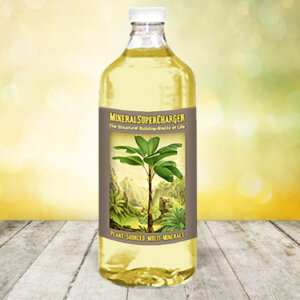
MineralSuperCharger, Premium Multi-Mineral Supplement, 32-Ounce Quart
$98.97 Add to cart -
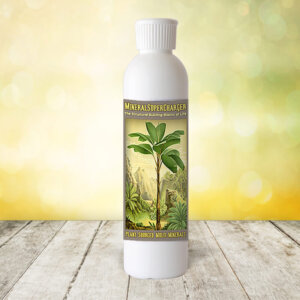
MineralSuperCharger, Premium Multi-Mineral Supplement, 8-Ounce (Sample Size)
$29.97 Add to cart -
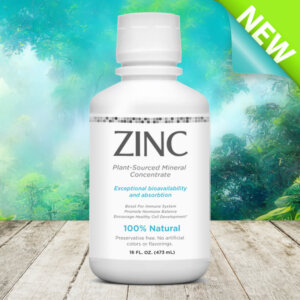
Zinc – Plant-Sourced Mineral Concentrate, 16-ounce
$24.97 Add to cart -
O4 Nasal Spray with Zinc
$14.97 Add to cart