How Do Red Blood Cells Carry Oxygen? The Complete Guide

Introduction
You breathe in oxygen thousands of times a day. But breathing is only the beginning. Before oxygen can power a single cell, it has to travel from your lungs through literally miles of blood vessels to reach the cells where it’s needed. That journey depends almost entirely on red blood cells. So how do red blood cells carry oxygen, and what can get in the way of that delivery?
This article covers how red blood cells work, how they pick up and release oxygen with remarkable precision, what can go wrong with that delivery system, and why keeping your red blood cells healthy matters more than most people realize.
What Red Blood Cells Actually Are
Red blood cells are the most abundant cells in the human body. Roughly a quarter of all your cells are red blood cells, and your bone marrow produces about 2.4 million of them every second.1
Unlike most cells in your body, mature red blood cells have no nucleus and no organelles. They have no mitochondria, no endoplasmic reticulum, and no other internal machinery found in other types of cells. Essentially, they are just bags designed to carry hemoglobin.
Hemoglobin is a protein that binds to oxygen and carries it through the bloodstream. It gives blood its red color and makes up about 95% of a red blood cell’s solid content.2 Each cell contains roughly 250 to 270 million hemoglobin molecules,3 which is what makes oxygen transport possible at the scale the body requires.
Red blood cells live for about 120 days before they wear out.4 When they reach the end of their lifespan, specialized immune cells called macrophages in the spleen, liver, and bone marrow break them down and reclaim the iron inside for use in new hemoglobin. The body wastes very little.
The Scale of the Operation
It helps to appreciate the numbers involved. Your body contains roughly 25 trillion red blood cells at any given moment. Each one completes a full circuit through your body in about 20 seconds.5 In a single minute, every red blood cell you have makes three trips from lungs to tissues and back.
Your bone marrow replaces the cells that wear out around the clock. When oxygen levels drop due to altitude, illness, or blood loss, the kidneys release a hormone called erythropoietin (EPO) that signals the bone marrow to ramp up production.6 The system is self-correcting. The body monitors oxygen availability continuously and adjusts the red blood cell supply to match demand.
The Shape That Makes It All Work
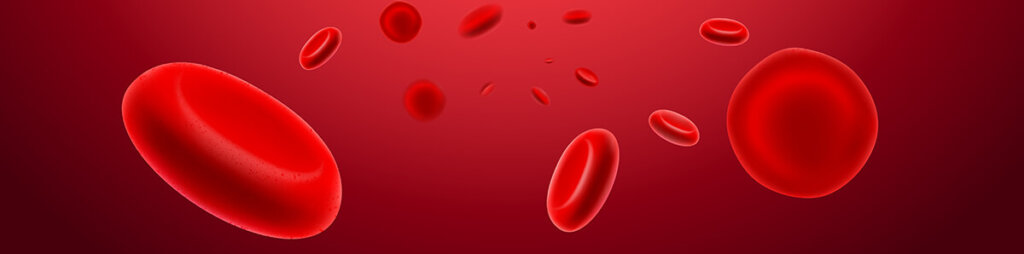
A red blood cell is not round. It has a biconcave shape: a disc with a slight dimple on each side, like a donut that never had its center punched all the way through. That shape is one reason red blood cells are so effective at what they do.
The biconcave “dimpled” disc shape gives the cell more surface area than a simple sphere would. More surface area means oxygen can get into the cell faster and reach the hemoglobin inside more efficiently. It also means the cell can flex and fold as it squeezes through the body’s smallest capillaries, some of which are narrower than the cell itself.7 A rigid, spherical cell would struggle to pass through. A flexible biconcave disc navigates those tight channels easily, keeping oxygen moving to the most remote corners of your body.
How Do Red Blood Cells Carry Oxygen?
Each hemoglobin protein contains four heme groups, each one built around a tiny iron component. That iron is what actually grabs onto oxygen. Because there are four of these iron-containing parts in every hemoglobin molecule, one hemoglobin molecule can carry up to four oxygen molecules at a time.8
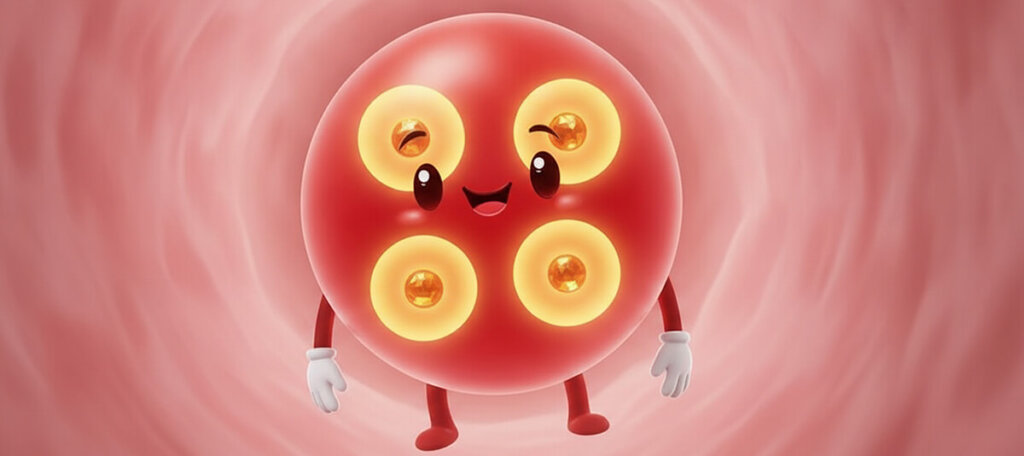
This loading happens in the lungs, where oxygen from the air you breathe crosses into the bloodstream and attaches to hemoglobin. The red blood cells then carry that oxygen to the rest of the body.
What makes hemoglobin remarkable is not just its capacity but its behavior. It exhibits what researchers call cooperative binding. When one oxygen molecule attaches to a heme group, the entire hemoglobin molecule shifts shape slightly, making the remaining binding sites more receptive to oxygen.9 Each oxygen molecule that binds makes the next one easier to attach. The reverse is also true. As the first oxygen molecule detaches, the remaining ones become easier to release as well. This means hemoglobin unloads efficiently in tissues that need it. Hemoglobin does not just passively hold oxygen. It responds dynamically to its environment.
How Hemoglobin Knows When to Let Go
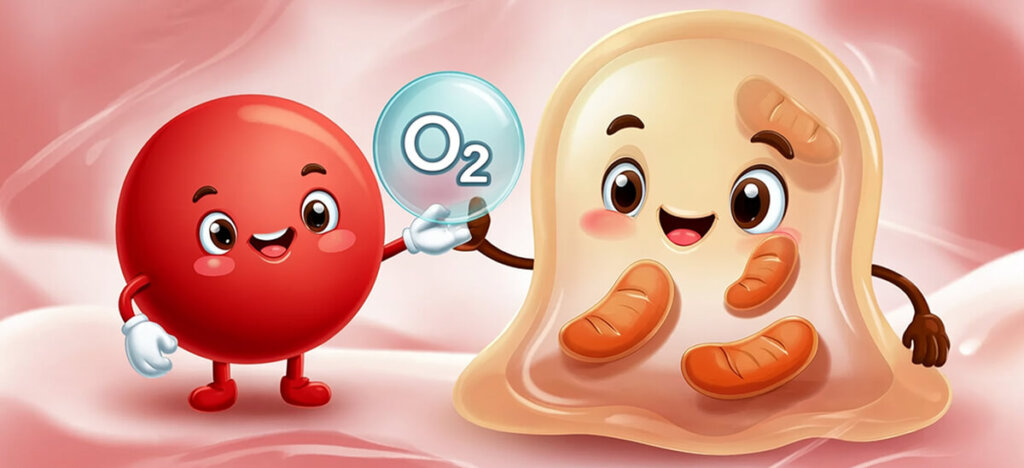
Loading oxygen in the lungs is only half the job. Hemoglobin also has to release oxygen at the right place and at the right time. The body uses local tissue conditions to signal when that release should happen.
When cells are active (such as muscles during exercise), cells consume oxygen and produce carbon dioxide (CO2). As CO₂ rises, acidity rises around the cell. When acidity rises, hemoglobin’s affinity for oxygen falls.10 This is the trigger that hemoglobin needs to release its oxygen where the demand is highest. When blood cells get to the lungs, the conditions are reversed. The lungs have an abundance of oxygen, and CO₂ is low, which signals the hemoglobin to load back up on oxygen.
This response is known as the Bohr effect, and it acts as a built-in feedback system. The cells doing the most work signal hemoglobin to deliver more oxygen to them. Resting cells get what they need; active cells get more.
What Can Go Wrong
As we have just seen, our body’s oxygen delivery system is quite elegant and efficient, but several common factors can impair it.
Iron Deficiency
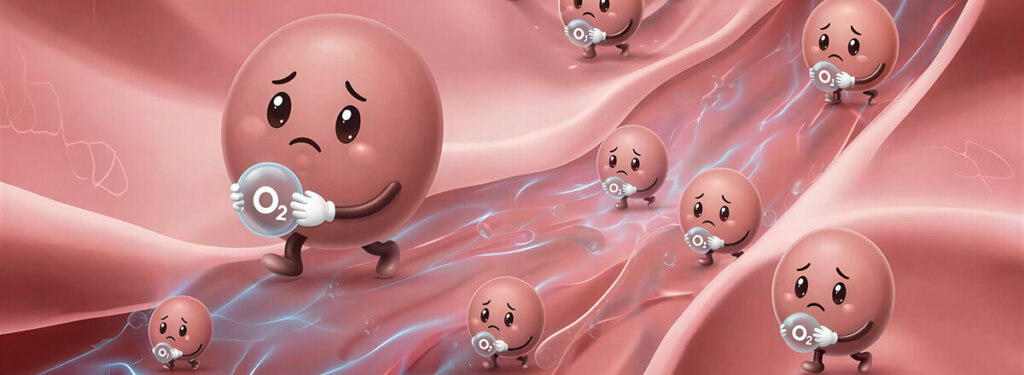
Iron sits at the core of every heme group. Without enough iron, the body can’t make as much hemoglobin, and the red blood cells the body produces are smaller, paler, and carry less oxygen than normal.11
Worldwide, iron-deficiency anemia is the most common nutritional deficiency. Its hallmark symptoms are fatigue, weakness, and shortness of breath. Those symptoms reflect exactly what is happening at the cellular level: tissues are not getting the oxygen they need.12 The bone marrow produces red blood cells, but those cells lack what they need to do their job effectively.
When it comes to getting enough iron from our diets, where the iron comes from matters; animal sources of iron are absorbed into the body more efficiently than plant sources. Vitamin C improves the absorption of plant-based iron. Tea, coffee, and some whole grains can reduce it. These distinctions matter more than most people appreciate. For a deeper look at iron’s role in how red blood cells carry oxygen, see our article on Iron Deficiency, Anemia, and Oxygen.
High Cholesterol
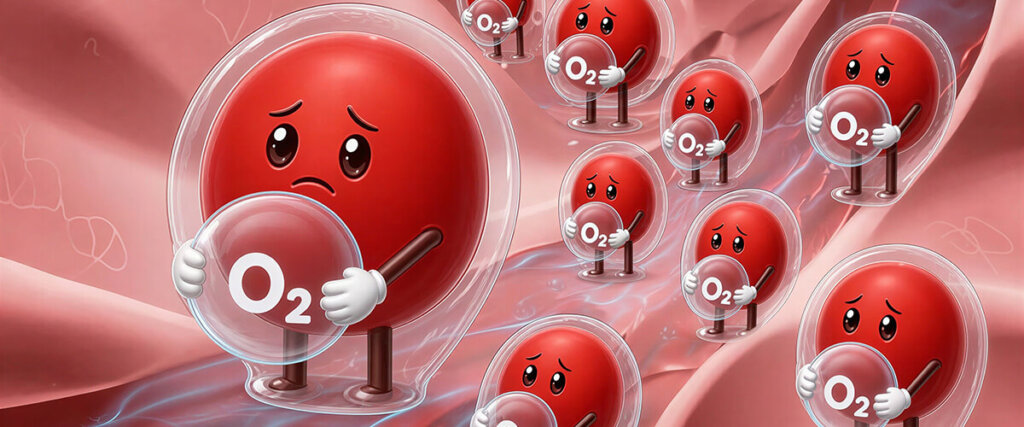
Red blood cells need adequate cholesterol to function properly. Red blood cell membranes are naturally cholesterol-rich. In a healthy red blood cell, about 50% of the membrane’s fat-based content (called lipids) is cholesterol.13 That cholesterol is not a problem. In fact, the body needs it there to keep the membrane flexible and to maintain the structural integrity that allows cells to flex through narrow capillaries.
The problem begins when cholesterol levels rise beyond what the membrane can accommodate. As cholesterol content increases beyond normal levels, the membrane stiffens and loses flexibility.14 A stiffer red blood cell is slower to change shape, slower to pass through capillaries, and slower to release oxygen into surrounding tissue. Research has also found that excess cholesterol creates a barrier that slows the movement of oxygen across it.15
There is a direct connection between high cholesterol and how much oxygen gets to your cells. High cholesterol reduces membrane flexibility, which, in turn, slows oxygen delivery.
Dehydration
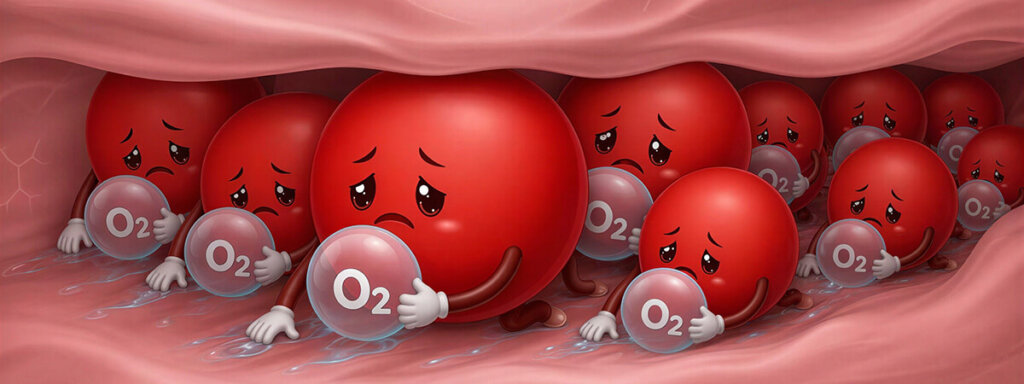
Plasma is the liquid that carries red blood cells throughout the body. It makes up about 55% of your blood. When you lose fluid and don’t replace it, plasma volume drops. As a result, the same number of red blood cells now moves through a reduced volume of liquid, making the blood thicker and more viscous (harder to flow).16
Thicker blood is harder to pump and flows more slowly, particularly through the smallest vessels. Research confirms that even mild dehydration can meaningfully change blood viscosity.17 When dehydration slows blood flow, this decreases the time red blood cells spend in contact with cells that need oxygen. Delivery becomes less efficient even though the red blood cells themselves may be perfectly healthy.
Staying well hydrated keeps blood at the viscosity it needs to move efficiently. It is one of the simplest ways to support how red blood cells carry oxygen to your cells.
What This Means for Your Health
Red blood cells do not work in isolation. The quality of the delivery they provide depends on the hemoglobin inside them, the flexibility of the membranes around them, and the viscosity of the plasma they travel through.
Iron keeps hemoglobin functional. Managing cholesterol keeps membranes flexible. Staying hydrated keeps blood moving efficiently. These are not abstract wellness recommendations. They reflect specific, documented mechanisms in how red blood cells carry oxygen to every cell in your body.
Understanding the delivery system also helps explain why some people feel fatigued, breathless, or mentally foggy even when their overall health appears normal. The red blood cells may be present in adequate numbers, but if the conditions for efficient delivery are not met, the cells the blood serves still don’t get all of what they need.
Also Consider
If you are looking for additional support for your body’s oxygen levels, OxygenSuperCharger™ is a bio-available liquid oxygen supplement that delivers stabilized oxygen directly to the body. You can read more about the clinical research supporting ASO® technology on our Research and Studies page.
References
- Broxmeyer HE. “Production and use of red blood cells.” US Patent 12173320. USPTO. https://image-ppubs.uspto.gov/dirsearch-public/print/downloadPdf/12173320
- Rieu M, et al. “Hemoglobin diffusion and the dynamics of oxygen capture by red blood cells.” PMC5585185. PMC/NIH. https://pmc.ncbi.nlm.nih.gov/articles/PMC5585185/
- Pretorius E, et al. “Hemoglobin Binding to the Red Blood Cell Membrane Is Associated with Decreased Cell Deformability.” PMC11172562. PMC/NIH. https://www.ncbi.nlm.nih.gov/pmc/articles/PMC11172562/
- Koury MJ. “Red Blood Cell Production.” Merck Manual Professional Edition. 2024. https://www.merckmanuals.com/professional/hematology-and-oncology/approach-to-the-patient-with-anemia/red-blood-cell-production
- Broxmeyer HE. “Production and use of red blood cells.” US Patent 12173320. USPTO. https://image-ppubs.uspto.gov/dirsearch-public/print/downloadPdf/12173320
- Koury MJ. “Red Blood Cell Production.” Merck Manual Professional Edition. 2024. https://www.merckmanuals.com/professional/hematology-and-oncology/approach-to-the-patient-with-anemia/red-blood-cell-production
- Pivkin IV, et al. “How the spleen reshapes and retains young and old red blood cells: A computational investigation.” PMC8584971. PMC/NIH. https://pmc.ncbi.nlm.nih.gov/articles/PMC8584971/
- Bunn HF. “Structure-function relations of human hemoglobins.” PMC1484532. PMC/NIH. https://pmc.ncbi.nlm.nih.gov/articles/PMC1484532/
- Sługocki M, et al. “Erythrocytes enhance oxygen-carrying capacity through self-regulation.” PMC12122758. PMC/NIH. https://pmc.ncbi.nlm.nih.gov/articles/PMC12122758/
- Bhatt DL, et al. “Physiology, Oxygen Transport.” StatPearls. NCBI Bookshelf. https://www.ncbi.nlm.nih.gov/books/NBK538336/
- Zimmermann MB, Hurrell RF. “Out of Balance: Systemic Iron Homeostasis in Iron-Related Disorders.” PMC3775241. PMC/NIH. https://pmc.ncbi.nlm.nih.gov/articles/PMC3775241/
- Linus Pauling Institute. “Iron.” Oregon State University. 2026. https://lpi.oregonstate.edu/mic/minerals/iron
- Mason RP, et al. “Red Blood Cell Membrane Cholesterol May Be a Key Regulator of Sickle Cell Disease Microvascular Complications.” PMC9694375. PMC/NIH. https://www.ncbi.nlm.nih.gov/pmc/articles/PMC9694375/
- Subczynski WK, et al. “High cholesterol/low cholesterol: Effects in biological membranes.” PMC5645210. PMC/NIH. https://pmc.ncbi.nlm.nih.gov/articles/PMC5645210/
- Dotson RJ, et al. “Influence of Cholesterol on the Oxygen Permeability of Membranes: Insight from Atomistic Simulations.” PMC5474842. PMC/NIH. https://pmc.ncbi.nlm.nih.gov/articles/PMC5474842/
- Secondary Polycythemia. “Secondary Polycythemia.” StatPearls. NCBI Bookshelf. https://www.ncbi.nlm.nih.gov/books/NBK562233/
- Liv Hospital. “Can Dehydration Cause Blood In Urine?” 2026. https://int.livhospital.com/can-dehydration-cause-blood-in-urine-scary-truth/

-
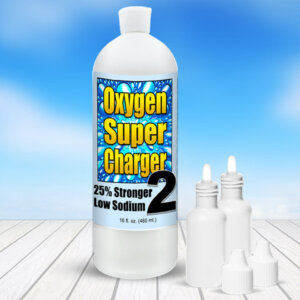
Ultra Strength OxygenSuperCharger2, 25% Stronger, 16–Ounce Bottle
$119.97 Add to cart -
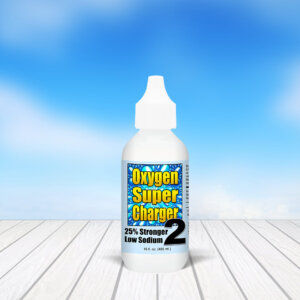
Ultra Strength OxygenSuperCharger2, 25% Stronger, 2–Ounce (Sample Size)
$35.97 Add to cart -
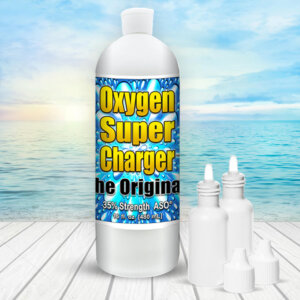
Original 35% Strength OxygenSuperCharger, 16–Ounce Bottle
$96.97 Add to cart -
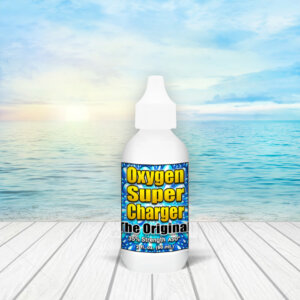
Original 35% Strength OxygenSuperCharger, 2–Ounce (Sample Size)
$27.97 Add to cart -

MineralSuperCharger, Premium Multi-Mineral Supplement, 32-Ounce Quart
$98.97 Add to cart -

MineralSuperCharger, Premium Multi-Mineral Supplement, 8-Ounce (Sample Size)
$29.97 Add to cart -
Zinc – Plant-Sourced Mineral Concentrate, 16-ounce
$24.97 Add to cart -

O4 Nasal Spray with Zinc
$14.97 Add to cart