Ozone and Stabilized Oxygen: What You Need to Know

If you have been researching oxygen supplements, you have probably seen ozone described as “activated oxygen.” The label is not wrong — but it doesn’t tell the whole story. Ozone and stabilized oxygen (sometimes also called activated oxygen) are not the same thing, and understanding the difference matters when deciding what to put into your body.
This article explains what ozone actually is, why it generates free radicals, and why understanding the difference between ozone and stabilized oxygen matters for anyone considering an oxygen supplement.
What Is Ozone — and Why Is It Called Activated Oxygen?
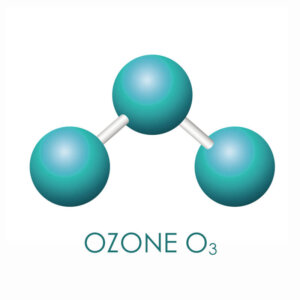
Ozone (O₃) is oxygen with a problem. Where the oxygen we breathe contains two atoms bonded in a stable pair (O₂), ozone contains three. That third atom is the issue.
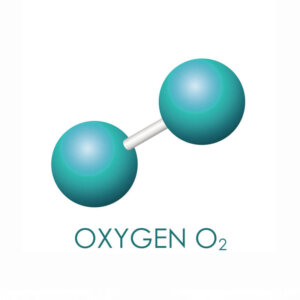
Because oxygen atoms bond in pairs, that third atom in ozone has no partner to stabilize it. It is chemically reactive — always looking to attach itself to something. This reactivity is exactly what makes ozone powerful as a sterilant — a substance that destroys or eliminates all forms of microbial life. It can break down bacteria, viruses, and odor-causing compounds through oxidation. In fact, ozone is the second most powerful sterilant in the world. After ozone releases its third atom during oxidation, it reverts to ordinary oxygen — making it environmentally friendly for industrial and water treatment purposes.
That reactive third atom is also why ozone is called “activated oxygen.” Technically, that’s accurate. But “activated” sounds like an upgrade. What it actually means is that one lone oxygen atom has been destabilized — for better and also for so much worse.
Free Radicals: Why Ozone Is Not a Body-Safe Oxygen Source
Here is where the distinction between ozone and stable activated oxygen becomes important for your health.
That unattached third oxygen atom in ozone is called a free radical — an unstable molecule with an unpaired electron. Free radicals are extremely short-lived, typically lasting around 1/10,000 of a second. But in that brief window, they react aggressively to whatever they encounter, including the body’s cells.
Not all free radicals are harmful. The immune system generates them deliberately as a controlled weapon to neutralize pathogens. In small amounts, they are essential because they act as signaling molecules that trigger immune responses and cell repair. However, the problem arises when the body produces free radicals faster than its antioxidant defenses can keep up. Research published in Oxidative Medicine and Cellular Longevity describes this imbalance as oxidative stress — which accelerates cellular aging, inflammation, and damage to DNA, proteins, and lipids.1
As we saw earlier, the immune system’s production of free radicals is kept in check by antioxidants within the body. This allows a healthy amount of free radicals to exist and assist in our body’s defenses. But when exposed to ozone, an external source of additional free radicals is directly introduced into the body. A study published in Free Radical Biology and Medicine confirmed that ozone triggers free radical production in blood samples, creating oxidative stress rather than relieving it.2 Furthermore, the FDA classifies ozone as a toxic gas with no established safe level for human inhalation. Ozone is legally restricted for use in food processing only and must be kept within strict safety limits.
This is why ozone, despite breaking down into oxygen, is not safe to consume as a supplement.
Ozone and Stabilized Oxygen: What Stabilized Actually Means
The word “stabilized” is doing important work here, and it is worth being precise.
Standard oxygen (O₂) is already stable — two atoms locked together in a covalent bond, meaning they share electrons to hold the molecule together. Ozone (O₃) is unstable because the third atom has no partner. If we continue down this logical path, then a molecule built from four oxygen atoms — two pairs bonded together — would be inherently stable because every atom has a partner.
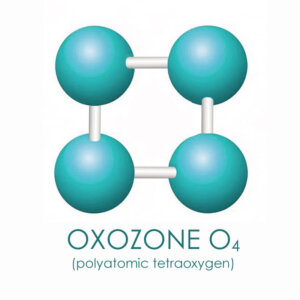
That stable molecule exists. It’s called O₄, or polyatomic tetraoxygen (also known as oxozone). It is an oxygen molecule composed of four atoms, formed around a mineral particle during the electrolysis process that produces it. Scientists attribute its stability to three factors: increased molecular mass, the spin of the O₄ electrons, and the sharing of electrons between the bonded atoms.3 OxygenSuperCharger™ contains high concentrations of O₄ in a saline base. This is what makes it both “activated” (meaning it contains bioactive oxygen) and “stabilized” (meaning the oxygen is held in a chemically stable form rather than a reactive one). That is the essential difference between ozone and stabilized oxygen — one is reactive with harmful side effects; the other is bioactive and safe to ingest.
How OxygenSuperCharger™ Is Made
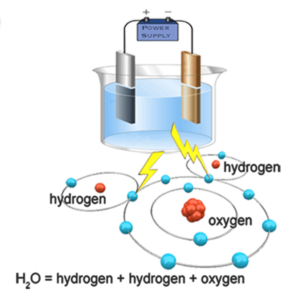
The manufacturing process for OxygenSuperCharger’s original formula begins with purified water and a small amount of food-grade sea salt (sodium chloride) to form a saline solution. OxygenSuperCharger2, the 25% stronger formula, begins with a proprietary mineral blend instead. Two proprietary composite metal electrodes apply an electrical current to the solution in an electrolytic bath. The current separates the hydrogen and oxygen atoms in a water molecule. The hydrogen escapes as gas, and the oxygen stabilizes within the electrolyte solution as dissolved O₄.
Large carbon filters then remove most of the remaining sea salt. What remains is a solution containing stable dissolved O₄ molecules and trace minerals. Importantly, the process neither forms nor uses chlorine dioxide or hydrogen peroxide. This matters because some sellers have marketed both as oxygen supplements — and both carry serious risks. Chlorine dioxide is essentially industrial bleach; the FDA has warned against ingesting it since 2010, citing severe vomiting, liver failure, and death. Hydrogen peroxide causes caustic burns to the digestive tract. It also releases oxygen gas so rapidly inside the body that it can create dangerous bubbles in the bloodstream, potentially causing a heart attack or stroke.
By contrast, OxygenSuperCharger™ has a pH of approximately 7.4 — within the normal range of human blood. It is manufactured in an FDA-approved GMP laboratory and is safe to ingest.
What Happens Inside the Body
Once inside the body, the oxygen in O₄ becomes available for cellular use. It is absorbed into the bloodstream either through the digestive tract or sublingually (under the tongue), where it may increase the amount of oxygen available to the cells. Unlike ozone, O₄ does not introduce any free radicals in the process.
This brings into sharp focus the difference between ozone and stabilized oxygen: ozone delivers oxygen via an oxidative reaction that generates free radicals as a byproduct. Stabilized O₄, by contrast, delivers oxygen directly — without the reactive intermediary.
Ozone vs. Stabilized Oxygen: Side-by-Side Comparison
| Ozone (O₃) | Stabilized Oxygen (O₄) | |
|---|---|---|
| Oxygen atoms | 3 (unstable) | 4 (stable pairs) |
| Free radicals | Yes — the third atom is a free radical | No |
| pH | N/A (gas) | ~7.4 (physiologically compatible) |
| Intended use | Industrial sterilant, water treatment | Oral dietary supplement |
| FDA position | Toxic gas; no safe inhalation level established | Manufactured in FDA-approved GMP facility |
| What enters the body | Oxidative gas | Dissolved O₄ |
The Bottom Line
Ozone and stabilized oxygen are both sometimes called “activated oxygen” — but what happens when each enters the body could not be more different. When you look at ozone and stabilized oxygen side by side, the core difference is clear. Ozone is reactive by design, and that reactivity produces free radicals the body must neutralize or get damaged by. Stabilized O₄ is bioactive without being reactive: it delivers oxygen to cells without generating oxidative stress in the process.
For anyone evaluating oxygen supplements, that distinction is worth understanding clearly.
To learn more about the clinical research behind OxygenSuperCharger™ and ASO® technology, visit our Research and Studies page.
References
- Pizzino G, Irrera N, Cucinotta M, et al. “Oxidative Stress: Harms and Benefits for Human Health.” Oxidative Medicine and Cellular Longevity. 2017. https://doi.org/10.1155/2017/8416763
- Ueno I, Hoshino M, Miura T, Shinriki N. “Ozone exposure generates free radicals in blood samples in vitro.” Free Radical Research. 1998. https://pubmed.ncbi.nlm.nih.gov/9790514/
- OxygenSuperCharger™ Bio-available Liquid Oxygen Explained. https://oxygensupercharger.com/video-series/activated-stabilized-oxygen-explained/

-
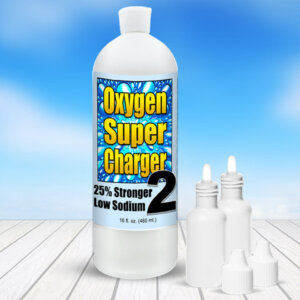
Ultra Strength OxygenSuperCharger2, 25% Stronger, 16–Ounce Bottle
$119.97 Add to cart -
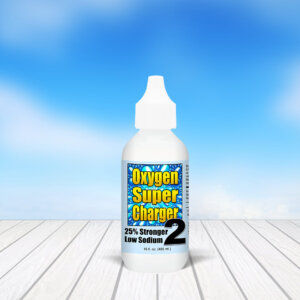
Ultra Strength OxygenSuperCharger2, 25% Stronger, 2–Ounce (Sample Size)
$35.97 Add to cart -
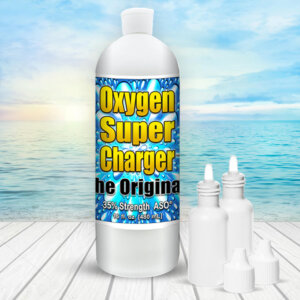
Original 35% Strength OxygenSuperCharger, 16–Ounce Bottle
$96.97 Add to cart -
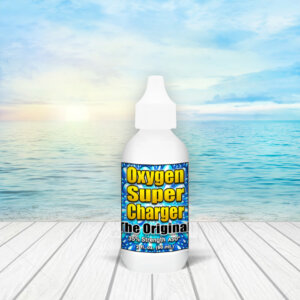
Original 35% Strength OxygenSuperCharger, 2–Ounce (Sample Size)
$27.97 Add to cart -

MineralSuperCharger, Premium Multi-Mineral Supplement, 32-Ounce Quart
$98.97 Add to cart -

MineralSuperCharger, Premium Multi-Mineral Supplement, 8-Ounce (Sample Size)
$29.97 Add to cart -
Zinc – Plant-Sourced Mineral Concentrate, 16-ounce
$24.97 Add to cart -

O4 Nasal Spray with Zinc
$14.97 Add to cart