Free Ways to Naturally Boost Oxygen Levels: A Complete Guide

Oxygen is your body’s most essential fuel. Every cell depends on it — for energy production, metabolism, immune function, and waste removal. Yet most people give little thought to whether they can boost oxygen levels naturally, or how easily that supply can be depleted. The good news is that several of the most effective ways to boost oxygen levels cost nothing at all. This guide brings together the key lifestyle factors that influence your body’s oxygen and what you can do about each one.
The good news is that several of the most effective ways to increase your available oxygen cost nothing at all. This guide brings together the key lifestyle factors that influence your body’s oxygen levels and what you can do about each one.
Why So Many People Are Oxygen-Deficient
Before looking at solutions, it helps to understand the problem.
A century ago, the air we breathed contained roughly 38% oxygen — a figure drawn from gas samples preserved in ancient fossilized amber. By the early 1900s, that figure had fallen to around 24%. Today, the estimated oxygen content of air in most locations is between 19 and 21%, and in densely populated, industrialized cities, it can be as low as 15%. Scientists consider 7% the threshold below which human life cannot be sustained.
Two factors drive most of this problem at the individual level: the air we breathe and the food we eat. Both are within our ability to influence.

1. Improve Your Diet
Food is one of the most overlooked sources of oxygen in the body. Fresh, whole foods — fruits, vegetables, and grains — contain significantly more bio-available oxygen than processed foods. When you eat a diet high in processed foods, you’re not just consuming less oxygen; you’re also forcing your body to use more of its stored oxygen to metabolize those foods. It’s a double depletion — and one of the simplest ways to boost oxygen levels is to change what’s on your plate.
What depletes oxygen through diet:
- Highly processed and packaged foods
- Foods high in sugar and saturated fat
- Red meat and high-cholesterol animal products
- Carbonated beverages
- White bread and refined grains
- Frozen and heavily cooked foods (heat destroys oxygen and enzymes in food)
What supports oxygen through diet:
- Fresh fruits and vegetables, eaten raw where possible
- Dark leafy greens rich in chlorophyll — spinach, kale, broccoli, mustard greens
- Supergreens like spirulina, chlorella, and blue-green algae
- Whole grains
- Foods high in enzymes, which support healthy cell pH
Chlorophyll deserves special mention. Its molecular structure is nearly identical to hemoglobin — the protein in red blood cells that carries oxygen — with the key difference being that hemoglobin is built around iron while chlorophyll is built around magnesium. Dark green foods are among the best dietary allies for oxygenation.
Juicing dark greens is one of the most efficient ways to quickly deliver their oxygen and enzyme content to your body.

2. Breathe More Effectively
Breathing is the most direct and immediate way to increase oxygen in your body — and most people do it poorly.
We tend to breathe shallowly, using only the upper chest. This pattern, often learned from parents and reinforced by stress and sedentary habits, limits the amount of air — and therefore oxygen — that reaches the lower lobes of the lungs where the most efficient gas exchange occurs.
Diaphragmatic breathing (also called belly breathing) uses the diaphragm — the large muscle beneath the lungs — to draw air deep into the lungs. To practice it:
- Sit or lie in a comfortable position
- Place one hand on your chest and one on your abdomen
- Inhale slowly through the nose, allowing your abdomen to rise while your chest stays relatively still
- Exhale fully through the mouth
- Repeat for several cycles
A simple habit-building trick: place a few sticky dots or small objects in spots you see throughout the day — your car mirror, your computer monitor, above the kitchen sink. Each time you notice one, take three or four deep diaphragmatic breaths. Over time, this retrains your default breathing pattern.
Other breathing practices supported by research for improving oxygenation include yoga breathing exercises (pranayama), pursed lip breathing (inhaling through the nose, then exhaling slowly through lightly pursed lips), and simply spending more time outdoors in areas with clean, fresh air.

3. Exercise Regularly
Regular physical activity is one of the most powerful long-term tools to boost oxygen levels and improve how your body uses them.
Regular aerobic exercise — walking, running, cycling, swimming — increases lung capacity, strengthens the heart, improves red blood cell production, and enhances the efficiency of oxygen exchange in the lungs. Even moderate daily activity makes a meaningful difference compared to a sedentary lifestyle.
Maintaining a healthy body weight also matters. Excess weight increases the body’s oxygen demand while simultaneously making breathing more effortful — a compounding effect on oxygen availability.
You don’t need to be an athlete to benefit. Consistent moderate activity — a brisk 30-minute walk daily — produces measurable improvements in cardiovascular efficiency and oxygen utilization over time.

4. Improve Your Indoor Air Quality
Most people spend the majority of their time indoors, where air quality is often worse than outdoors. Stale, recirculated air has lower oxygen content. Household chemicals, synthetic materials, and poor ventilation all contribute.
Simple ways to improve indoor air quality:
- Open windows and doors for at least 5–10 minutes daily, even in cold weather, to exchange stale air for fresh air
- Keep live plants indoors — they consume carbon dioxide and produce oxygen through photosynthesis. Plants such as snake plants, pothos, and peace lilies are particularly effective
- Avoid synthetic air fresheners, which introduce chemical compounds into the air
- Use natural cleaning products where possible
- If you live in a heavily polluted area, consider a quality air purifier with a HEPA filter

5. Spend Time in Nature
Urban and suburban environments have measurably lower oxygen levels than forests, parks, and coastal areas. Time spent in natural settings — particularly around trees, near the ocean, or at moderate elevations — exposes you to air with higher oxygen content and lower pollutant levels.
Even regular walks in a local park make a difference. Forests in particular produce high concentrations of oxygen and phytoncides (natural compounds released by trees) that have been shown to support immune function and reduce stress.
If you live or work at high altitude — above 7,000 feet — your body is already adapting by producing more oxygen-carrying red blood cells. At lower elevations, this adaptation fades, but the cardiovascular efficiency it builds can persist.

6. Reduce Substances That Deplete Oxygen
Several common lifestyle factors consume oxygen in the body without providing any benefit:
- Alcohol — metabolizing alcohol requires significant oxygen and contributes to systemic acidity, which further reduces oxygen availability at the cellular level
- Tobacco smoke — introduces carbon monoxide into the bloodstream, which binds to hemoglobin in place of oxygen, directly reducing the blood’s oxygen-carrying capacity
- Caffeine in excess — contributes to systemic acidity over time
- High-fat, high-sugar diets — as discussed above, these foods require more oxygen to metabolize than they provide
Reducing or eliminating these factors frees up more of your body’s oxygen for the functions it’s supposed to serve.

7. Mind Your Posture
Poor posture — particularly the forward-slumped position common among desk workers and smartphone users — physically compresses the chest cavity and restricts the diaphragm’s range of motion. The result is shallower breathing and reduced lung capacity over time.
Simple postural habits that support better breathing:
- Sit with your back straight and shoulders back and down
- Keep your screen at eye level to avoid forward head posture
- Take regular standing or walking breaks if you work at a desk
- Consider yoga or Pilates, both of which emphasize posture, core strength, and breath awareness
Also Consider: Oxygen Supplementation
The steps above are free, sustainable, and genuinely effective. For many people, making these changes produces a noticeable improvement in energy, stamina, and mental clarity.
If you want to go further — particularly if you’re looking for additional ways to boost oxygen levels beyond lifestyle changes — a bio-available liquid oxygen supplement may be worth considering.
OxygenSuperCharger™ is an Activated Stabilized Oxygen (ASO®) supplement with a pH of approximately 7.4 — matching the body’s own blood pH — and contains bio-available oxygen already in solution, ready for use without any chemical reaction required. It can be taken sublingually (under the tongue) or added to pure water.
Unlike older-generation stabilized oxygen products that rely on a stomach-acid reaction to release oxygen, OxygenSuperCharger™ delivers oxygen directly. Clinical research on the ASO® formula has shown measurable increases in blood oxygen saturation, reduced blood lactate in exercising athletes, and improved VO2 max. Details on those studies are on our Research page.
The free methods in this guide and a quality oxygen supplement aren’t competing approaches — they work together.
NOTE: Information on this website is provided for educational purposes only and is not intended to prescribe treatment of any medical condition. Statements made on this website have not been evaluated by the FDA. These products are not intended to treat, diagnose, cure, or prevent any disease or medical condition, and are sold as dietary supplements only. Consult with a qualified medical professional before taking any dietary supplement.

-
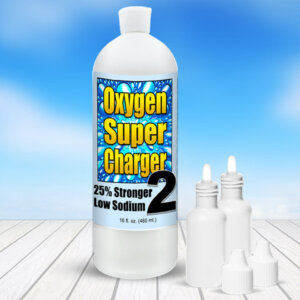
Ultra Strength OxygenSuperCharger2, 25% Stronger, 16–Ounce Bottle
$119.97 Add to cart -
Ultra Strength OxygenSuperCharger2, 25% Stronger, 2–Ounce (Sample Size)
$35.97 Add to cart -
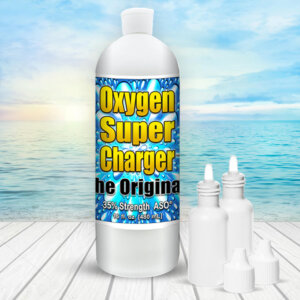
Original 35% Strength OxygenSuperCharger, 16–Ounce Bottle
$96.97 Add to cart -

Original 35% Strength OxygenSuperCharger, 2–Ounce (Sample Size)
$27.97 Add to cart -

MineralSuperCharger, Premium Multi-Mineral Supplement, 32-Ounce Quart
$98.97 Add to cart -
MineralSuperCharger, Premium Multi-Mineral Supplement, 8-Ounce (Sample Size)
$29.97 Add to cart -
Zinc – Plant-Sourced Mineral Concentrate, 16-ounce
$24.97 Add to cart -

O4 Nasal Spray with Zinc
$14.97 Add to cart