How Oxygen Works in the Body: Energy, Cells, and Survival

How oxygen works… You can survive weeks without food. Days without water. But without oxygen, your body starts to fail in minutes. That single fact tells you everything. Oxygen is not just one nutrient among many. It is the one your body cannot store, cannot replace with anything else, and cannot do without for more than a few minutes.
Most people think of oxygen as something they breathe. But understanding how oxygen works reveals a much bigger story. It touches nearly every energy-producing process in your body. It fuels your brain, muscles, heart, and immune system. All at once. All the time. This article walks through how oxygen works. Where it comes from. How your body captures it. And what your cells do with it every second of the day.

Where Your Oxygen Comes From
The air you breathe is roughly 21% oxygen. However, around 300 million years ago, during the Carboniferous period, atmospheric oxygen peaked at roughly 31 percent — about 50 percent higher than today. Fossil evidence suggests this oxygen-rich environment contributed to the evolution of giant insects.1 Dragonflies with nearly three-foot wingspans. Millipedes stretching more than six feet long. Today’s 21% is the stable baseline that modern life — including the human body — has evolved around.
Two main sources produce the oxygen in Earth’s atmosphere. Most people know that plants release oxygen as a byproduct of photosynthesis — the process by which plants convert sunlight and carbon dioxide into energy. What surprises many people is that the oceans play a far bigger role. Microscopic marine organisms called phytoplankton produce an estimated 50 to 80 percent of all atmospheric oxygen.2 These tiny creatures drift near the ocean’s surface, absorbing sunlight and producing oxygen through photosynthesis. In fact, the amounts they release dwarf anything produced on land. Every breath you take is, in large part, a gift from the sea.
The oceans of the world seem so big — so impersonal. But what happens in the sea affects every breath you take on land. When ocean temperatures rise, and phytoplankton populations shrink, the consequences reach all the way to the air we breathe.3 That alone is worth paying attention to. Furthermore, it connects ocean health directly to your next breath. Combined with modern life, it creates oxygen challenges for everyone — challenges that affect you every day.

How Modern Life Gets in the Way
Indoor air quality is one of the most overlooked factors affecting the amount of oxygen available to breathe. Most Americans spend more than 90% of their time indoors.4 In poorly ventilated offices, cars, and closed spaces, carbon dioxide builds up. Available oxygen drops compared to fresh outdoor air.
Urban pollution adds another obstacle. Particulate matter and ground-level ozone don’t directly reduce atmospheric oxygen. They do, however, make it harder for your lungs to absorb what’s there.
Altitude is another factor. The percentage of oxygen in the air stays the same at high elevations. However, lower air pressure changes what your lungs receive.5 Fewer oxygen molecules reach your lungs with each breath. That’s why a short hike at 10,000 feet can leave a sea-level visitor gasping in ways unrelated to fitness level.
Sedentary Lifestyle and Smoking
Sedentary habits play a role, too. Shallow chest breathing is common in people who sit at desks all day. It delivers far less oxygen per breath than the deeper, diaphragmatic breathing that comes naturally when you’re active.
Smoking is perhaps the most direct way modern life interferes with oxygen transport. Cigarette smoke contains carbon monoxide — a gas that binds to hemoglobin with roughly 200 times more affinity than oxygen does. The reason comes down to chemistry: carbon monoxide fits the iron-containing binding site in hemoglobin like a key in a lock, and once it binds, it holds on far more tightly than oxygen ever could. When carbon monoxide locks onto a hemoglobin molecule, that molecule is no longer available to carry oxygen. Making matters worse, the body is slow to clear it. Breathing normal air, it takes approximately five hours just to eliminate half of the carbon monoxide absorbed from a single cigarette.6 For someone who smokes throughout the day, hemoglobin molecules are constantly being taken offline. With every heartbeat, less oxygen reaches your cells.
The good news is that when oxygen is available, your body knows exactly what to do with it.

The Journey of a Breath
When you inhale, air travels down through your throat and into your lungs. It passes through airways that branch and narrow until they reach tiny air sacs called alveoli. Your lungs contain roughly 480 million of these tiny, balloon-like sacs.7 Laid flat, their combined surface area would cover between 70 and 80 square meters — roughly the floor space of a small apartment. All of that surface is folded inside your chest to enable efficient gas exchange with the bloodstream.
At the wall of each alveolus, oxygen crosses into the surrounding blood vessels through diffusion. This is the same process we saw in the lungs — molecules naturally moving from an area of higher concentration (the air in your lungs) to a lower concentration (your blood). Once in the blood, the oxygen molecules bind to hemoglobin, a protein packed inside red blood cells. Think of red blood cells as the delivery trucks, and hemoglobin as the cargo — the part that actually picks up oxygen from the lungs and drops it off at cells throughout the body.
Each hemoglobin molecule can hold up to four oxygen molecules. About 98% of all the oxygen in your blood travels this way — locked onto hemoglobin, ready for delivery.5 The other 2% dissolves into the blood plasma. This is the light-yellow liquid that makes up about 55% of your total blood volume. It suspends and transports red blood cells, white blood cells, and platelets throughout the body, while also carrying waste products like carbon dioxide back to the lungs for removal.
Oxygen’s Round Trip
Your heart then pumps this oxygen-loaded blood through the arteries to every nook and cranny of your body. When red blood cells reach tissues that need oxygen — muscles, the brain, the heart — the laws of chemistry take over. Warmer temperatures, increased acidity, and lower oxygen levels in active tissues force hemoglobin to release its oxygen cargo directly to the cells that need it. After releasing their oxygen cargo, red blood cells immediately begin a new task. They pick up carbon dioxide waste from the tissues and transport it back to the lungs to be exhaled. Once back in the lungs, the carbon dioxide is exhaled. The red blood cells are then free to bind with fresh oxygen and begin the whole journey all over again. Amazingly, the whole round trip takes less than 60 seconds.

Inside the Cell: How Oxygen Works to Generate Energy
Once oxygen diffuses from the bloodstream into your body’s cells, it moves toward the mitochondria by the same process — simple diffusion. It flows naturally from areas of higher concentration to areas of lower concentration. Oxygen molecules are small enough to pass directly through cell membranes without needing special channels or transporters. They make their way effortlessly to the mitochondrial core, where energy production takes place. You may have heard mitochondria called the cell’s powerhouses — and that description is accurate. This is where how oxygen works becomes most clear — and most critical.
Inside the mitochondria, oxygen combines with glucose in a process that creates ATP — adenosine triphosphate. Glucose is the simple sugar your body produces by breaking down the carbohydrates, fats, and proteins from the food you eat. Think of it as the fuel your cells run on — and oxygen as the spark that ignites it.
Creating ATP is critically important because it is the energy currency your body runs on. Every muscle movement, every thought, every heartbeat, every immune response spends ATP. With a good oxygen supply, the oxygen-glucose process within the mitochondria yields around 30 to 32 ATP molecules from a single glucose molecule.8 Scientists call it aerobic respiration.
However, when oxygen runs short, your body switches to a backup system called anaerobic metabolism. It’s faster, but far less efficient — producing only two ATP molecules per glucose molecule. It also creates far more waste in the form of lactic acid.9 That familiar burning sensation in your legs during a hard run? That’s lactic acid building up faster than your body can clear it. Anaerobic metabolism is the body’s “break glass in case of emergency” option. Like an emergency generator, it kicks in when needed — but it was never meant to run the whole house.

When Demand Exceeds Supply
Even in a healthy body, there are times when oxygen demand overwhelms supply.
Heavy exercise is the clearest example. As your muscles work harder, they burn through oxygen faster than your heart and lungs can deliver it. Your breathing quickens, your heart rate climbs, and your body starts leaning on anaerobic metabolism. Not everyone experiences this the same way, however. Well-trained athletes use oxygen far more efficiently than untrained ones. Endurance training strengthens the heart, increases the number of capillaries in muscles, and even grows more mitochondria in muscle cells — all of which allow the body to deliver and use oxygen more efficiently. All of that adaptation has a measurable result. VO₂ max measures the maximum rate of oxygen the body can consume during exercise. It is one of the strongest indicators of cardiovascular fitness, and it improves as a direct result of the body becoming better at delivering and using oxygen.
High altitude creates a similar challenge, though in a different way. The body needs time to adjust to thinner air — typically 2 to 3 days. Moving quickly to elevations above 8,000 feet often brings on headaches, fatigue, and mental fog. To compensate, the body ramps up red blood cell production to carry more oxygen.
Even if you don’t live at a high altitude or push your body athletically, oxygen levels can still affect your everyday life. Poor indoor air quality, shallow breathing, and prolonged stress can all quietly reduce your body’s oxygen supply. The results tend to be subtle — a little mental cloudiness, slower muscle recovery, low energy that’s hard to explain. Nevertheless, they add up.

Liquid Oxygen Supplements: A Different Path to the Cells
Most approaches to supporting oxygen levels focus primarily on the lungs — better breathing, cleaner air, cardiovascular fitness. But research into how oxygen works in the body has opened another path. Bio-available liquid oxygen supplements introduce stabilized oxygen molecules into the bloodstream through the digestive tract.
The destination is the same: oxygen to the cells. The route, however, is different — and understanding how oxygen works through this pathway opens up new options for support. For people whose oxygen demands are elevated by exercise, environment, altitude, or age, liquid oxygen supplements offer a practical option. They can deliver more oxygen to the cells — without relying solely on the lungs.
Also Consider
If you are looking for additional support for your body’s oxygen levels, OxygenSuperCharger™ is a bio-available liquid oxygen supplement that provides stabilized oxygen directly to the body. You can read more about the clinical research supporting ASO® technology on our Research and Studies page.
References
- Harrison JF, et al. “Atmospheric Hypoxia Limits Selection for Large Body Size in Insects.” PLoS ONE. 2009. PMC. https://pmc.ncbi.nlm.nih.gov/articles/PMC2606028/
- Petrovskii S, et al. “A two-timescale model of plankton–oxygen dynamics predicts formation of oxygen minimum zones and global anoxia.” PNAS. 2024. PMC. https://pmc.ncbi.nlm.nih.gov/articles/PMC11129986/
- Seymour M, et al. “The human physiological impact of global deoxygenation.” Experimental Physiology. 2016. PMC. https://pmc.ncbi.nlm.nih.gov/articles/PMC5138252/
- U.S. Environmental Protection Agency. “Indoor Air Quality.” EPA Report on the Environment. https://www.epa.gov/report-environment/indoor-air-quality
- Hall JE, et al. “Physiology, Oxygen Transport.” StatPearls. NCBI Bookshelf. https://www.ncbi.nlm.nih.gov/books/NBK538336/
- Hampson NB. “Carboxyhemoglobin Toxicity.” StatPearls. NCBI Bookshelf. https://www.ncbi.nlm.nih.gov/books/NBK557888/
- Ochs M, et al. “The number of alveoli in the human lung.” American Journal of Respiratory and Critical Care Medicine. 2004. Referenced in: Rao A, Johncy S. “Tennis Courts in the Human Body.” Cureus. 2022. PMC. https://pmc.ncbi.nlm.nih.gov/articles/PMC8863270/
- Adeva-Andany MM, et al. “Beyond mitochondria: Alternative energy-producing pathways from all strata of life.” PMC. 2021. https://pmc.ncbi.nlm.nih.gov/articles/PMC8052308/
- Kenney WL, et al. “Physiology, Adenosine Triphosphate.” StatPearls. NCBI Bookshelf. https://www.ncbi.nlm.nih.gov/books/NBK553175/

-
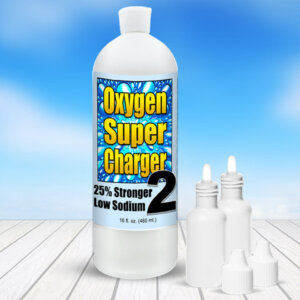
Ultra Strength OxygenSuperCharger2, 25% Stronger, 16–Ounce Bottle
$119.97 Add to cart -
Ultra Strength OxygenSuperCharger2, 25% Stronger, 2–Ounce (Sample Size)
$35.97 Add to cart -
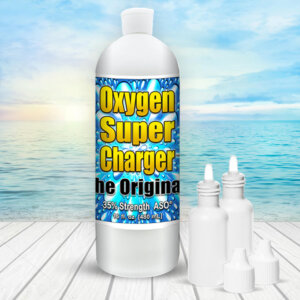
Original 35% Strength OxygenSuperCharger, 16–Ounce Bottle
$96.97 Add to cart -

Original 35% Strength OxygenSuperCharger, 2–Ounce (Sample Size)
$27.97 Add to cart -

MineralSuperCharger, Premium Multi-Mineral Supplement, 32-Ounce Quart
$98.97 Add to cart -

MineralSuperCharger, Premium Multi-Mineral Supplement, 8-Ounce (Sample Size)
$29.97 Add to cart -

Zinc – Plant-Sourced Mineral Concentrate, 16-ounce
$24.97 Add to cart -

O4 Nasal Spray with Zinc
$14.97 Add to cart